


Vietnam Manpower Agency – Vietnam’s Leading Skilled Worker Supplier
Vietnam Manpower Agency: Vietnam’s Leading Supplier of Skilled Workers for International Markets
Introduction
In today’s rapidly changing global economy, labor shortages have become one of the most serious challenges facing European businesses. Manufacturing plants, construction companies, shipyards, mechanical engineering firms, food-processing factories, agricultural businesses, and technical service providers all need a stable workforce with the right skills, discipline, and ability to work on long-term assignments.
Although recruitment demand remains high, many European companies find it increasingly difficult to attract enough qualified candidates from their local labor markets. Aging populations, skills gaps, declining interest among younger generations in technical occupations, and strong competition between employers have made recruitment more difficult and expensive.
The European Commission has identified 42 occupations facing labor shortages across the European Union. These occupations cover construction, engineering, transportation, services, healthcare, and technology. Recent reports from EURES also continue to highlight shortages of welders, electricians, construction workers, machine operators, and other skilled technical employees in many European countries.
In the first quarter of 2026, the job vacancy rate in the European Union remained at approximately 2.1%, demonstrating that labor demand had not been fully met. For many companies, the inability to recruit enough workers has led to delayed production, higher labor costs, unfinished projects, reduced capacity, and lost business opportunities.
In this context, Vietnam is emerging as a highly promising source of skilled international labor. Vietnam has a large working-age population, a strong vocational-training tradition, an expanding industrial base, and a significant number of workers with practical experience in construction, mechanical engineering, welding, shipbuilding, industrial electricity, factory production, food processing, textiles, and agriculture.
Vietnam Manpower Agency was established to connect qualified Vietnamese workers with international employers that have genuine recruitment needs. With more than 20 years of experience in international manpower recruitment and an extensive nationwide network for sourcing, training, and skill assessment, Vietnam Manpower Agency provides comprehensive workforce solutions for employers in Europe, Asia, the Middle East, and other international markets.
According to the company’s operational records, our network has participated in the recruitment, training, and deployment of more than 30,000 Vietnamese workers to overseas markets. Our service is not limited to introducing candidates. It includes job-order analysis, candidate sourcing, document screening, practical skill testing, supplementary training, foreign-language preparation, occupational safety orientation, legal-document coordination, pre-departure education, and post-arrival workforce support.
Our objective is to ensure that international employers receive workers who are properly selected, well prepared, and suitable for the actual requirements of each position.
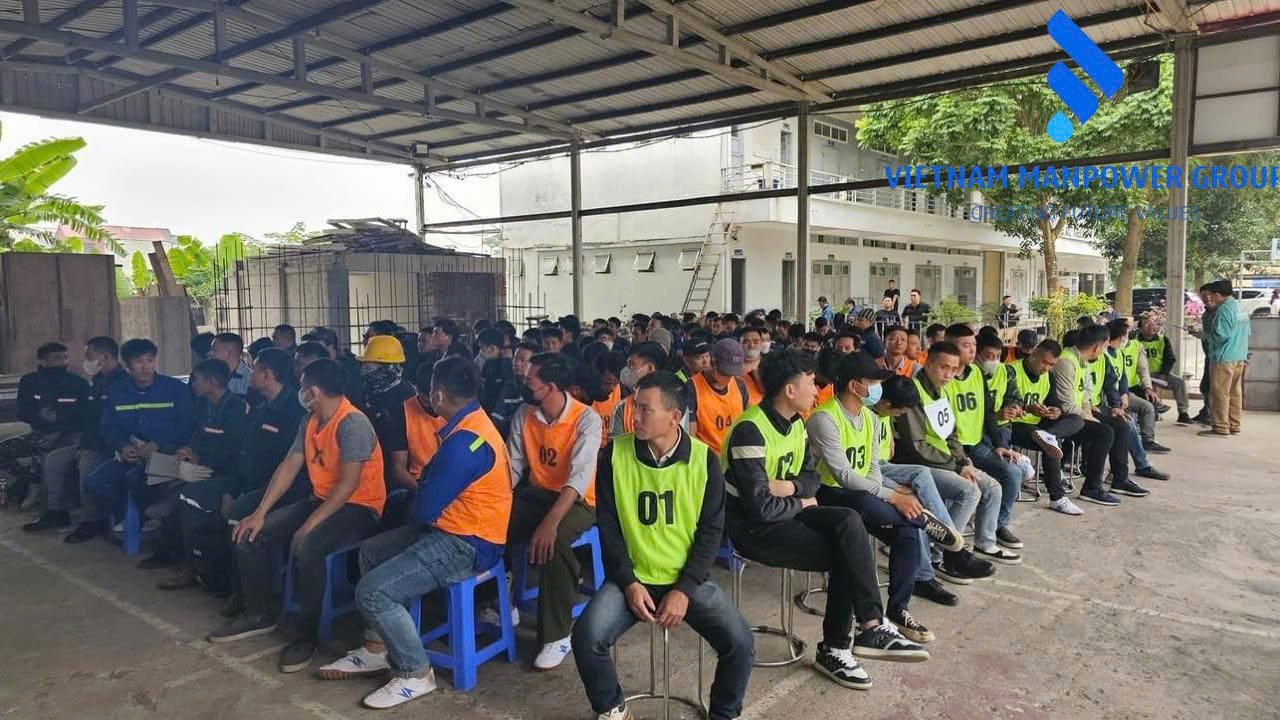
1. What Is Vietnam Manpower Agency?
Vietnam Manpower Agency is a Vietnamese workforce recruitment and supply organization that connects Vietnamese workers with overseas employers.
Our primary responsibility is to search for, screen, assess, train, and introduce candidates who meet the specific requirements of international companies.
Unlike general recruitment services, Vietnam Manpower Agency focuses on industries that require large numbers of workers, clearly defined practical skills, and the ability to meet strict project schedules.
The major sectors we serve include:
- Shipbuilding and marine engineering;
- Civil and industrial construction;
- Mechanical engineering and steel structures;
- Metal fabrication;
- Manufacturing and factory production;
- Industrial electricity and mechanical-electrical installation;
- Meat, seafood, poultry, and food processing;
- Textile and garment manufacturing;
- Industrial sewing-machine operation;
- Agriculture, livestock farming, and greenhouse production;
- Hotels, restaurants, and service industries;
- Warehouse, packaging, and logistics operations;
- Production-line and machine-operation positions.
The objective of Vietnam Manpower Agency is not simply to provide a sufficient number of workers. We focus on supplying the right workers, with the right skills, at the right time, and in accordance with the employment contract and technical requirements.
Every recruitment order is analyzed based on:
- The job description;
- The working environment;
- Contract duration;
- Required technical skills;
- Occupational safety standards;
- Expected productivity;
- Workplace language requirements;
- Accommodation conditions;
- Working hours and overtime arrangements;
- The legal requirements of the destination country.
Based on this information, Vietnam Manpower Agency develops a separate recruitment and assessment standard for each project.
Candidates may be required to complete:
- Preliminary interviews;
- Employment-history verification;
- Health and physical-fitness screening;
- Practical trade tests;
- Technical retraining;
- Foreign-language training;
- Safety training;
- Interviews with the overseas employer;
- Final document verification.
This approach helps reduce the difference between a worker’s actual ability and the employer’s expectations. It also minimizes the risk of replacement after the employee has arrived and the project has already begun.
2. Why Do European Companies Need International Workers?
Labor shortages in Europe do not result from a single cause. They are the combined result of long-term demographic, educational, economic, and workforce-mobility changes.
2.1. Europe’s Working-Age Population Is Declining
Many European countries are experiencing population aging. The number of people retiring is increasing, while the number of young workers entering the labor market is not sufficient to replace them.
Research from the European Commission’s Joint Research Centre indicates that the European Union’s labor force may decline significantly over the long term unless appropriate measures are taken in education, workforce participation, vocational training, and skilled migration.
This demographic challenge is particularly serious for labor-intensive sectors such as:
- Construction;
- Mechanical engineering;
- Shipbuilding;
- Manufacturing;
- Agriculture;
- Transportation;
- Food processing;
- Industrial maintenance.
2.2. Fewer Young People Choose Technical Careers
In many countries, younger workers tend to prefer employment in offices, technology, business, finance, or services.
Jobs that require employees to work at construction sites, in mechanical workshops, on production lines, outdoors, or in physically demanding environments often struggle to attract a new generation of workers.
Construction remains one of the sectors most seriously affected by labor shortages across Europe. Employers frequently report difficulties recruiting:
- Bricklayers;
- Carpenters;
- Steel fixers;
- Formwork carpenters;
- Electricians;
- Plumbers;
- Welders;
- Industrial painters;
- Finishing workers;
- Machine operators.
2.3. A Gap Exists Between Training and Workplace Requirements
A candidate may have a diploma or certificate but may still lack the practical skills required by an employer.
In technical industries, workers must be able to:
- Read drawings;
- Use tools and equipment correctly;
- Follow occupational safety procedures;
- Understand technical tolerances;
- Meet production targets;
- Perform work according to specific quality standards;
- Communicate effectively with supervisors and team members.
A gap between classroom education and actual workplace conditions creates a situation in which unemployed people may be looking for jobs while companies are still unable to recruit suitable workers.
2.4. Labor Demand Changes According to Seasons and Projects
Shipbuilding, construction, industrial production, food processing, and agriculture often require companies to recruit hundreds of additional employees within a relatively short period.
A shipyard may win a new vessel-building contract. A construction company may begin several projects at the same time. A food factory may need additional workers before a high-demand season. A farm may need seasonal workers for planting or harvesting.
Recruiting all these workers locally may be impossible within the required timeline.
Employers therefore need an international manpower partner that can organize sourcing, screening, testing, training, documentation, and worker deployment according to a coordinated plan.
2.5. Labor Shortages Differ Between Countries
Labor demand is not the same in every European country or region.
Some countries report serious shortages in:
- Construction;
- Mechanical engineering;
- Machine operation;
- Manufacturing;
- Food processing;
- Transportation;
- Agriculture;
- Welding;
- Electrical installation;
- Maintenance services.
This means that a manpower supplier must research each destination market separately instead of using the same recruitment model for every country.
Vietnam Manpower Agency studies the specific requirements of each market before launching recruitment.
3. The Potential of Vietnam’s Workforce
Vietnam has several important advantages that allow it to become a strategic source of technical and industrial workers for international employers.
Vietnam’s labor force includes more than 50 million people of working age, creating a substantial pool of candidates for vocational training and overseas recruitment programs.
However, Vietnam’s advantage is not based only on the number of available workers.
Many Vietnamese employees have accumulated practical experience in:
- Industrial parks;
- Construction projects;
- Mechanical workshops;
- Shipyards;
- Steel-fabrication factories;
- Food-processing plants;
- Textile and garment factories;
- Foreign-invested enterprises;
- Agricultural production facilities.
3.1. A Strong Manufacturing Background
Over several decades, Vietnam has developed major industries such as:
- Electronics;
- Textiles and garments;
- Mechanical engineering;
- Equipment manufacturing;
- Shipbuilding;
- Construction-material production;
- Furniture manufacturing;
- Food processing;
- Metal fabrication;
- Industrial assembly.
This development has created a workforce familiar with factory environments, production lines, shift work, productivity targets, quality-control procedures, and workplace discipline.
3.2. Experience in International Companies
Many Vietnamese workers have previously worked for Japanese, Korean, European, Taiwanese, and other foreign-invested companies.
They may already be familiar with:
- 5S workplace organization;
- Quality-management systems;
- Occupational safety procedures;
- Production reporting;
- Teamwork;
- Supervisor instructions;
- Continuous improvement;
- Standard operating procedures.
This experience provides a valuable foundation for adapting to overseas workplaces.
3.3. Ability to Receive Additional Training
Workers with good basic experience can be retrained according to the standards of the receiving employer.
For example, welders can be trained according to:
- A required welding position;
- A specific welding process;
- The type and thickness of material;
- Joint configuration;
- Testing requirements;
- Employer productivity standards.
Construction workers can practice using:
- The exact brick or block size;
- Mortar types;
- Finishing standards;
- Measurements;
- Construction methods required by the project.
Customized training helps employers avoid depending entirely on workers who are already fully qualified before recruitment begins.
3.4. Strong Motivation for Career Development
Vietnamese workers who participate in international employment programs often have clear objectives:
- Improving their income;
- Gaining professional experience;
- Supporting their families;
- Learning modern technology;
- Developing long-term technical careers;
- Saving capital for their future.
When workers receive transparent information, fair employment conditions, safe workplaces, and appropriate support, they are more likely to remain committed to their contracts and perform productively.
3.5. Adaptability
Adaptability should not be assumed to be an automatic characteristic of every candidate. It must be developed through proper selection, orientation, and preparation.
Vietnam Manpower Agency evaluates:
- Attitude;
- Health;
- Discipline;
- Learning ability;
- Emotional readiness;
- Ability to work away from home;
- Ability to follow regulations;
- Teamwork skills;
- Capacity to work under pressure.
Workers receive guidance regarding:
- Workplace culture;
- Company regulations;
- Local climate;
- Accommodation;
- Transportation;
- Occupational safety;
- Communication;
- Conflict resolution;
- Emergency procedures.
4. Key Advantages of Vietnam Manpower Agency
4.1. Nationwide Recruitment Network
Vietnam Manpower Agency has developed a recruitment network covering many provinces and regions with strong traditions in technical and industrial employment.
Candidates are sourced through:
- Vocational schools;
- Training centers;
- Manufacturing companies;
- Professional associations;
- Local recruitment networks;
- Workers who have completed overseas contracts;
- Groups of skilled tradespeople;
- Employee referrals;
- Online recruitment systems;
- Local workforce-development programs.
A broad network allows Vietnam Manpower Agency to recruit for large orders while still classifying candidates according to trade, experience, and technical level.
4.2. Practical Skill-Testing Capability
For technical occupations, written employment records provide only preliminary information. Practical ability must be tested directly.
Vietnam Manpower Agency can organize job-specific assessments, including:
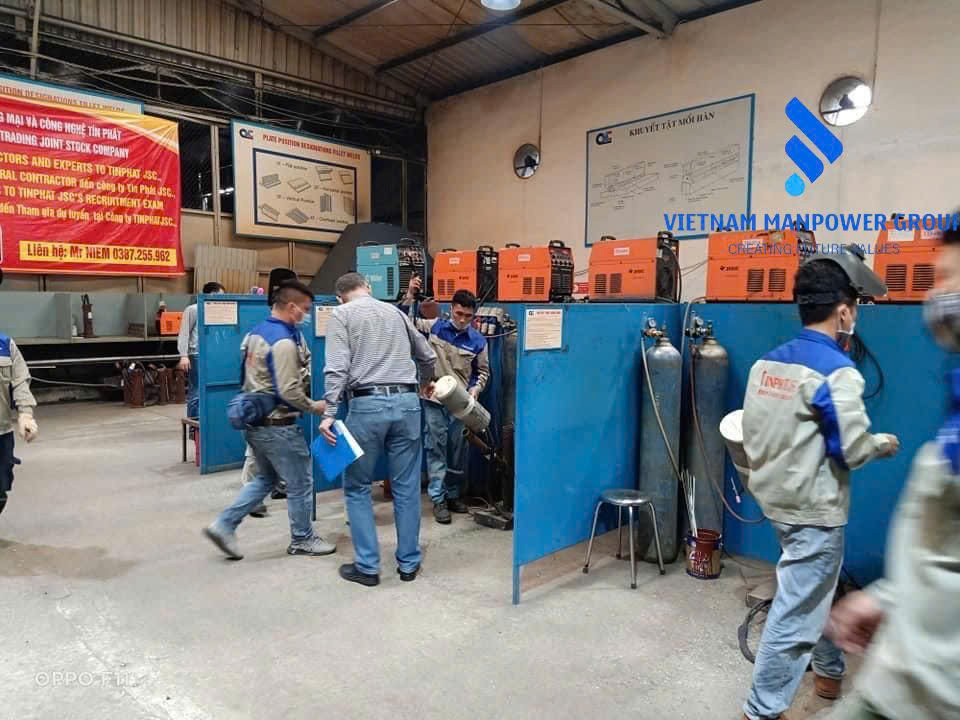
- Plate-welding tests;
- Pipe-welding tests;
- Mechanical-drawing interpretation;
- Steel-structure assembly;
- Pipe fabrication and installation;
- Bricklaying;
- Plastering;
- Tiling;
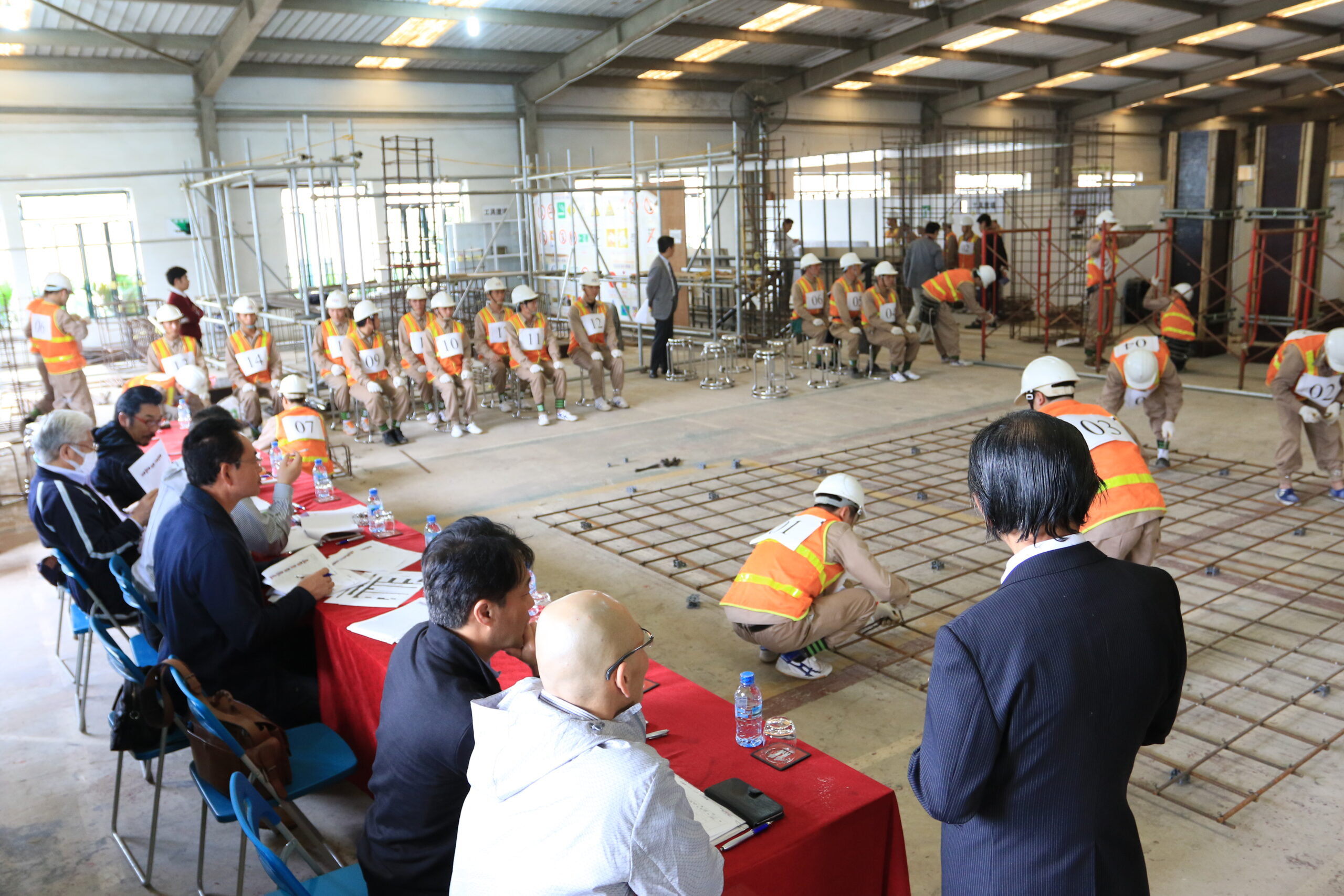
- Formwork installation;
- Reinforcement-steel installation;
- Basic electrical connection;
- Machine operation;
- Industrial sewing;
- Fish filleting;
- Meat cutting and deboning;
- Food packaging;
- Productivity tests under time limits.
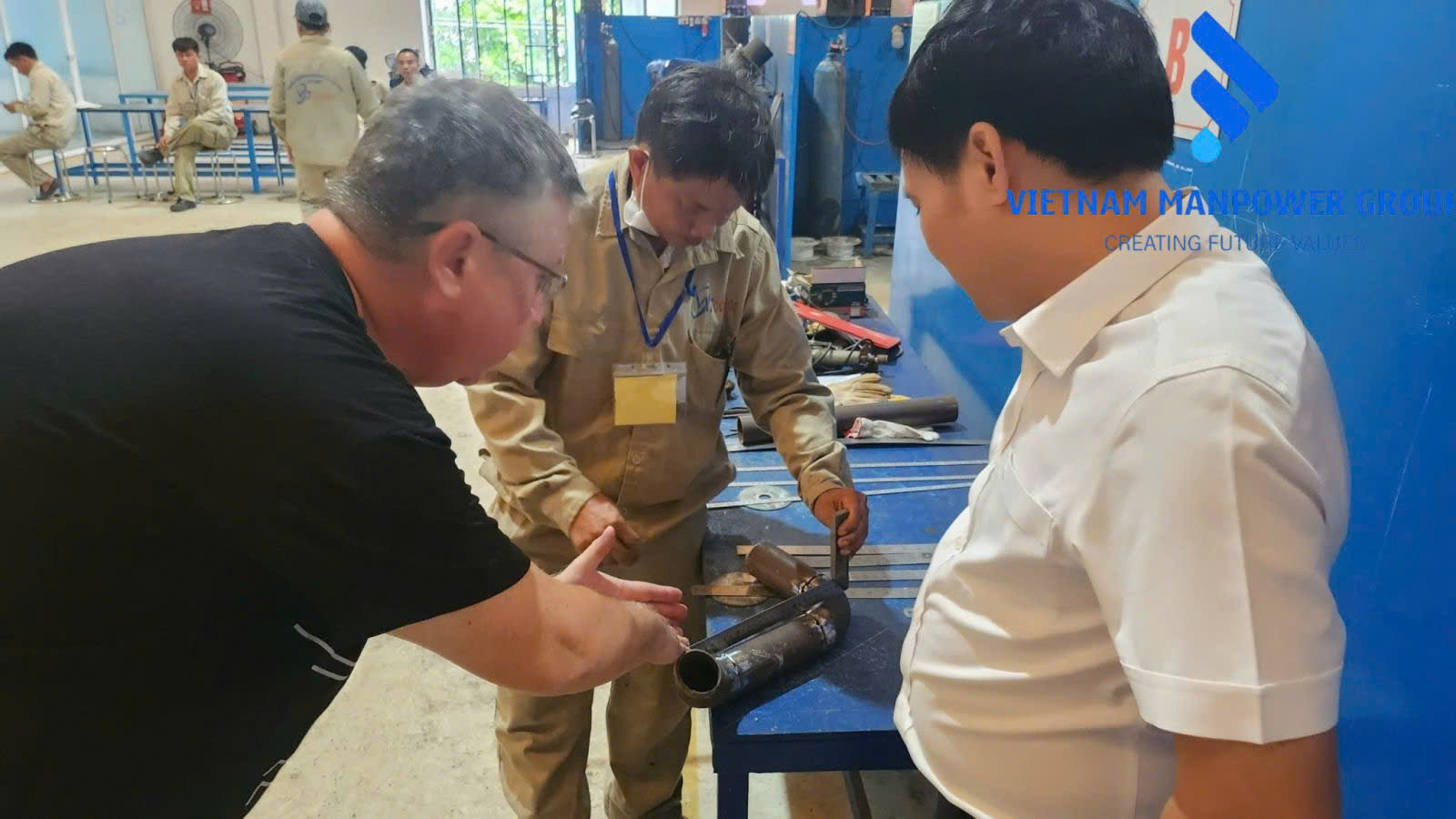
Representatives of the overseas employer may participate in person in Vietnam or observe interviews and assessments through video.
4.3. Training According to Each Employer’s Requirements
Two companies in the same industry may have very different technical requirements.
One employer may need FCAW welders qualified in the 3G position, while another may need MAG, TIG, SMAW, or 6G pipe welders.
Vietnam Manpower Agency develops training programs based on:
- The job description;
- Production procedures;
- Materials;
- Welding processes;
- Quality-control standards;
- Productivity targets;
- Safety requirements;
- Tools and equipment;
- Sample products supplied by the employer;
- Technical drawings;
- Workplace instructions.
Project-specific training allows workers to become familiar with the employer’s requirements before arriving in the destination country.
4.4. Candidate Information and Document Verification
Incorrect information about experience, health, qualifications, or identity can create risks for both the employer and the worker.
Vietnam Manpower Agency conducts:
- Document review;
- Employment-history interviews;
- Certificate verification;
- Experience verification;
- Identity checking;
- Medical screening coordination;
- Practical skill assessment.
Depending on project requirements, a candidate file may include:
- Curriculum vitae;
- Passport;
- Diploma or vocational certificate;
- Employment-experience confirmation;
- Trade-test evaluation sheet;
- Practical-test video;
- Medical examination records;
- Training results;
- Safety certificates;
- Foreign-language results;
- Interview evaluation.
4.5. Support Before and After Departure
Workforce-supply services should not end when the employee boards an airplane.
Vietnam Manpower Agency aims to provide continuous support, including:
- Guidance on preparing documents;
- Pre-departure training;
- Travel coordination;
- Arrival and reception support;
- Probation monitoring;
- Employer-feedback collection;
- Assistance with workplace communication;
- Support for accommodation and daily-life issues;
- Supplementary training when necessary;
- Replacement support in accordance with the contract;
- Re-employment assistance when appropriate.
Continuous support helps employers reduce management pressure during the first months of worker adaptation.
5. Shipbuilding and Marine Engineering Workers
Shipbuilding is one of the industries that requires high levels of technical skill, accuracy, teamwork, and safety discipline.
Vietnam Manpower Agency can recruit and train workers for shipyards, ship-repair facilities, offshore projects, and marine steel-structure operations.
5.1. Shipbuilding Welders
Common welding processes and positions include:
- FCAW welders;
- MIG/MAG welders;
- TIG welders;
- SMAW welders;
- 3G welders;
- 4G welders;
- 6G welders;
- Process 135;
- Process 136;
- Process 138;
- Process 141;
- Carbon-steel welders;
- Stainless-steel welders;
- Plate welders;
- Pipe welders.
Candidates can be tested according to the employer’s technical standards.
Depending on the project, assessment and certification requirements may relate to:
- ISO 9606;
- AWS D1.1;
- ASME Section IX;
- EN standards;
- Classification-society requirements;
- Shipyard-specific standards.
It is important to note that ISO develops international standards but does not directly issue individual certificates. Testing and certification must be completed by an authorized or accepted certification organization, according to the project’s requirements.
5.2. Ship Structure Fitters and Fabricators
Typical duties include:
- Reading technical drawings;
- Measuring and marking materials;
- Cutting steel;
- Fitting components;
- Assembling blocks;
- Aligning structures;
- Checking dimensions;
- Supporting welding operations;
- Correcting distortion after welding.
Candidates for these positions need good spatial understanding, drawing-reading ability, and coordination with welders.
5.3. Pipe Fitters
Shipbuilding pipe fitters must understand:
- Pipe drawings;
- Technical symbols;
- Flow direction;
- Connection methods;
- Flange installation;
- Pipe-support systems.
Tasks may include:
- Measuring and cutting pipe;
- Preparing pipe ends;
- Installing flanges;
- Fitting piping systems;
- Checking alignment;
- Supporting pressure tests;
- Installing accessories;
- Performing maintenance and repair.
5.4. Marine Electricians
Marine electricians may install:
- Electrical cables;
- Cable trays;
- Switchboards;
- Control systems;
- Lighting systems;
- Electrical equipment;
- Communication systems;
- Shipboard power systems.
Candidates must be assessed on their ability to:
- Read electrical diagrams;
- Use electrical testing equipment;
- Follow lockout and isolation procedures;
- Work safely in confined areas;
- Install equipment according to specifications.
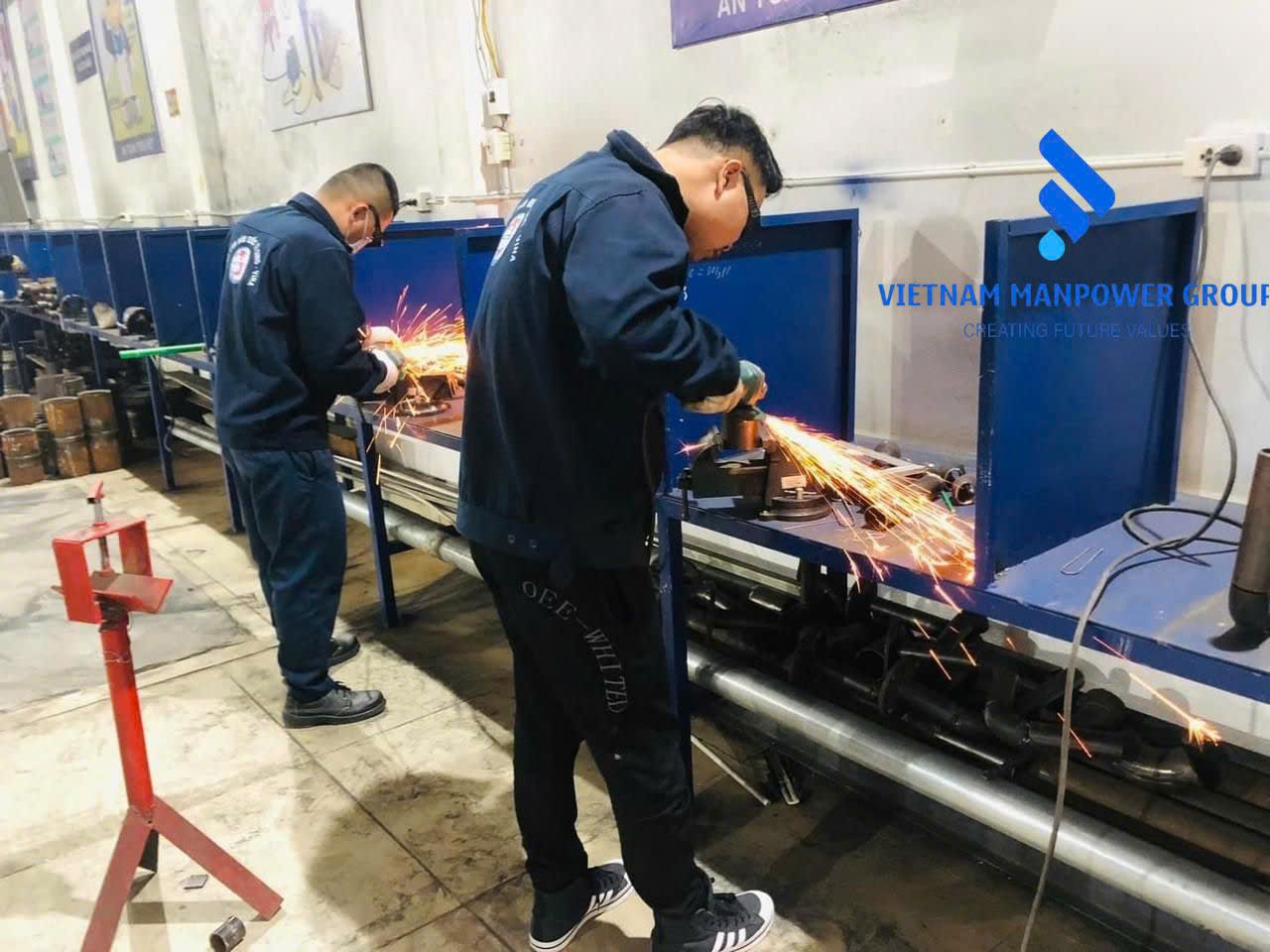
5.5. Industrial Painters and Blasters
Surface protection directly affects the quality and service life of a vessel.
Vietnam Manpower Agency can supply:
- Sandblasters;
- Surface-preparation workers;
- Industrial painters;
- Ship-hull painters;
- Coating workers;
- Paint-mixing workers;
- Painting-machine operators;
- Surface inspectors.
Workers need to understand:
- Surface-preparation requirements;
- Coating thickness;
- Drying time;
- Environmental conditions;
- Protective-equipment requirements;
- Confined-space safety.
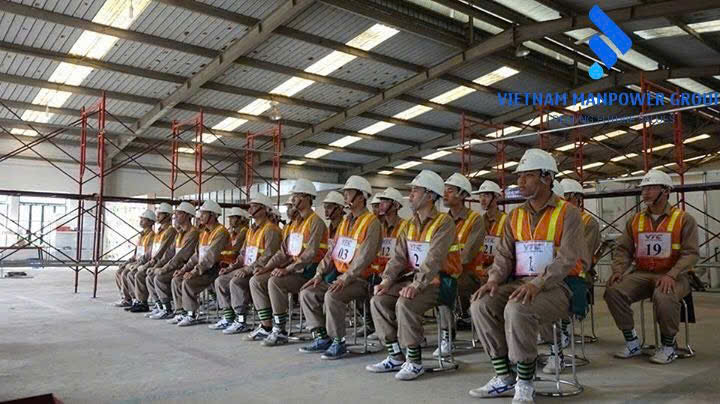
5.6. Shipyard Scaffolders
Scaffolding in shipyards is complex and is often installed in restricted spaces.
Scaffolders must receive training in:
- Erection and dismantling;
- Connection-point inspection;
- Load capacity;
- Working at height;
- Safety harnesses;
- Protection of areas below;
- Scaffold handover procedures;
- Confined-space awareness.
6. Construction Workers
Construction continues to be one of the sectors with high labor demand in Europe.
Vietnam Manpower Agency can recruit teams for civil, commercial, infrastructure, and industrial construction projects.
6.1. Bricklayers and Block Masons
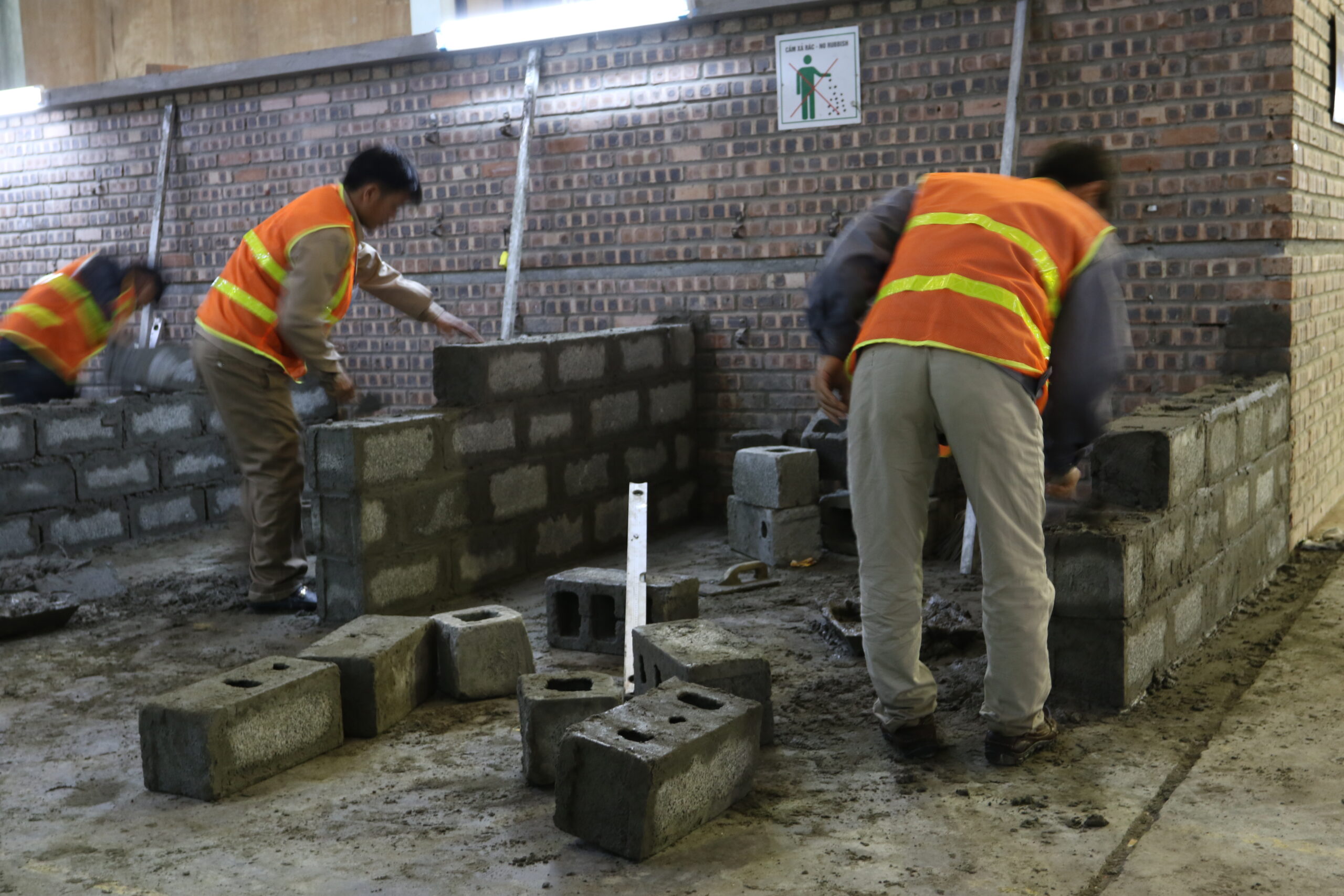
Bricklayers can be assessed on their ability to:
- Lay bricks;
- Lay concrete blocks;
- Maintain straightness;
- Control levels and dimensions;
- Mix and use mortar;
- Build corners;
- Read basic drawings;
- Meet productivity requirements.
Tests can be designed using the materials and dimensions used by the employer.
6.2. Plasterers
Typical work includes:
- Preparing surfaces;
- Mixing materials;
- Applying plaster;
- Controlling thickness;
- Producing a flat finish;
- Treating joints and corners;
- Maintaining workplace cleanliness.
Employers generally evaluate not only speed but also flatness, adhesion, material consumption, and finishing quality.
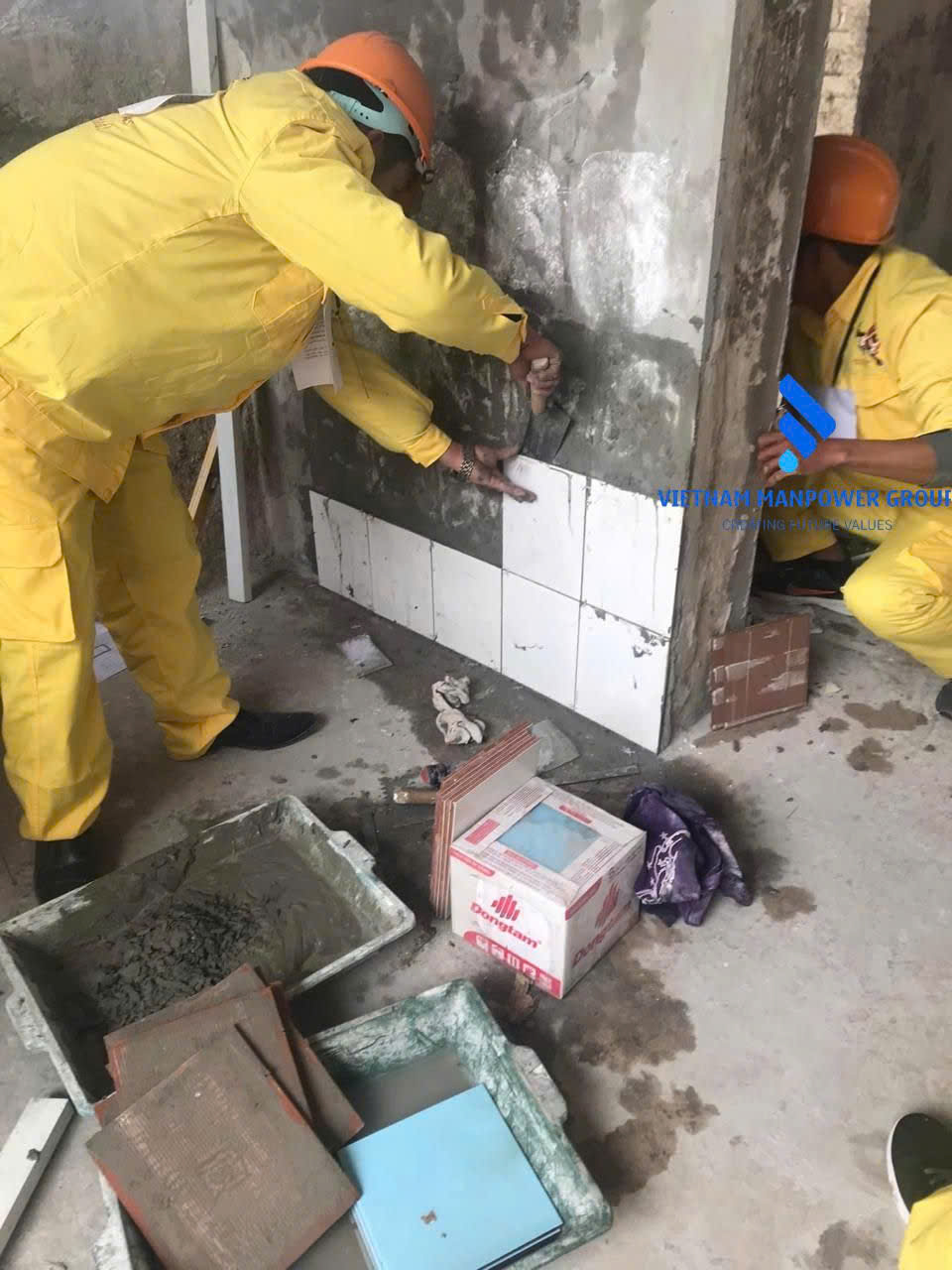
6.3. Tilers
Candidates may be tested in:
- Measurement and layout;
- Tile cutting;
- Adhesive mixing;
- Joint alignment;
- Slope control;
- Wall tiling;
- Floor tiling;
- Edge and corner finishing;
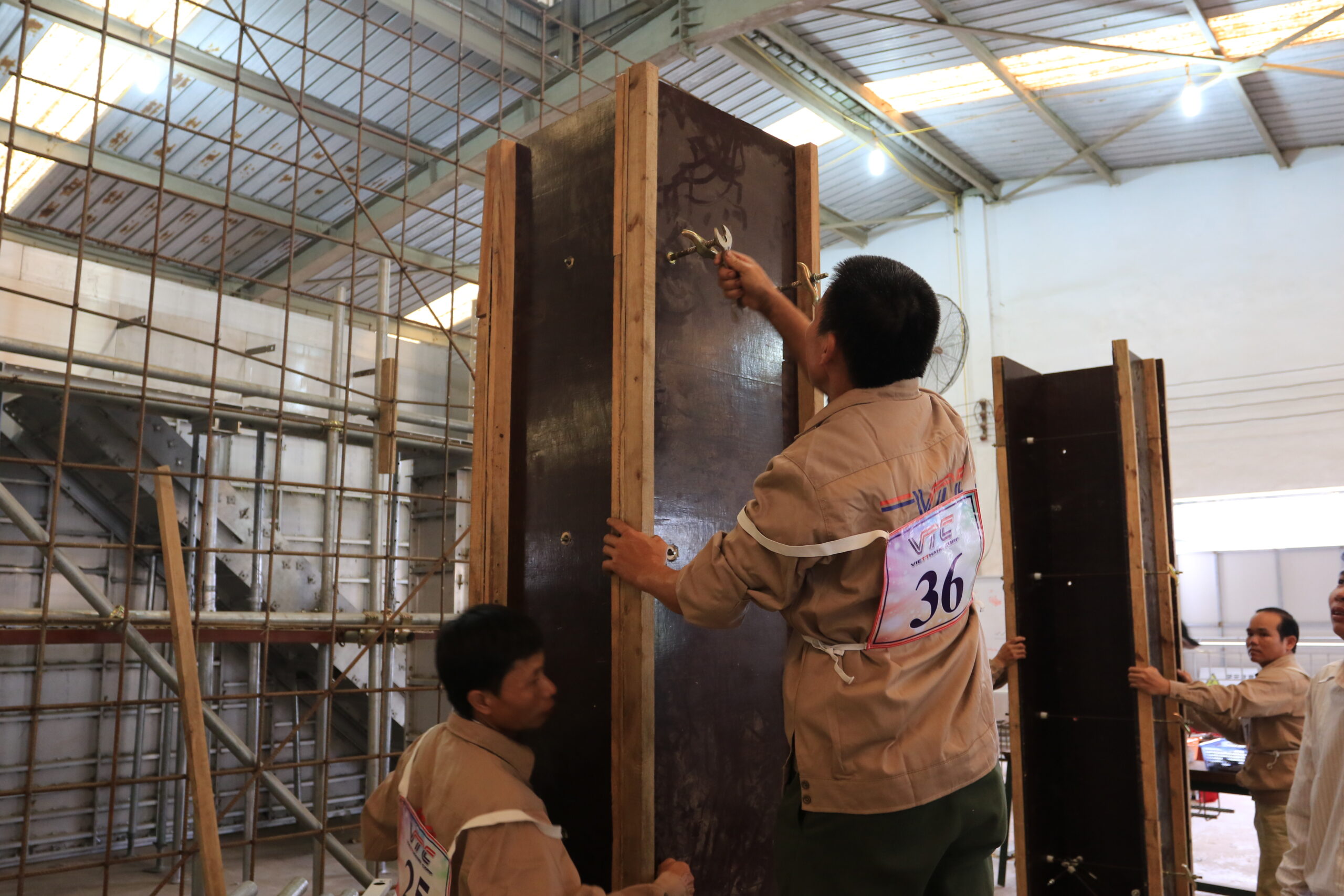
- Grouting.
6.4. Carpenters and Formwork Workers
Vietnam Manpower Agency can recruit:
- Construction carpenters;
- Wooden-formwork carpenters;
- Aluminum-formwork workers;
- Industrial-formwork installers;
- Finishing carpenters;
- Interior carpenters.
Candidates need to understand:
- Measurements;
- Levels;
- Structural support;
- Formwork systems;
- Safe dismantling procedures;
- Drawing interpretation.
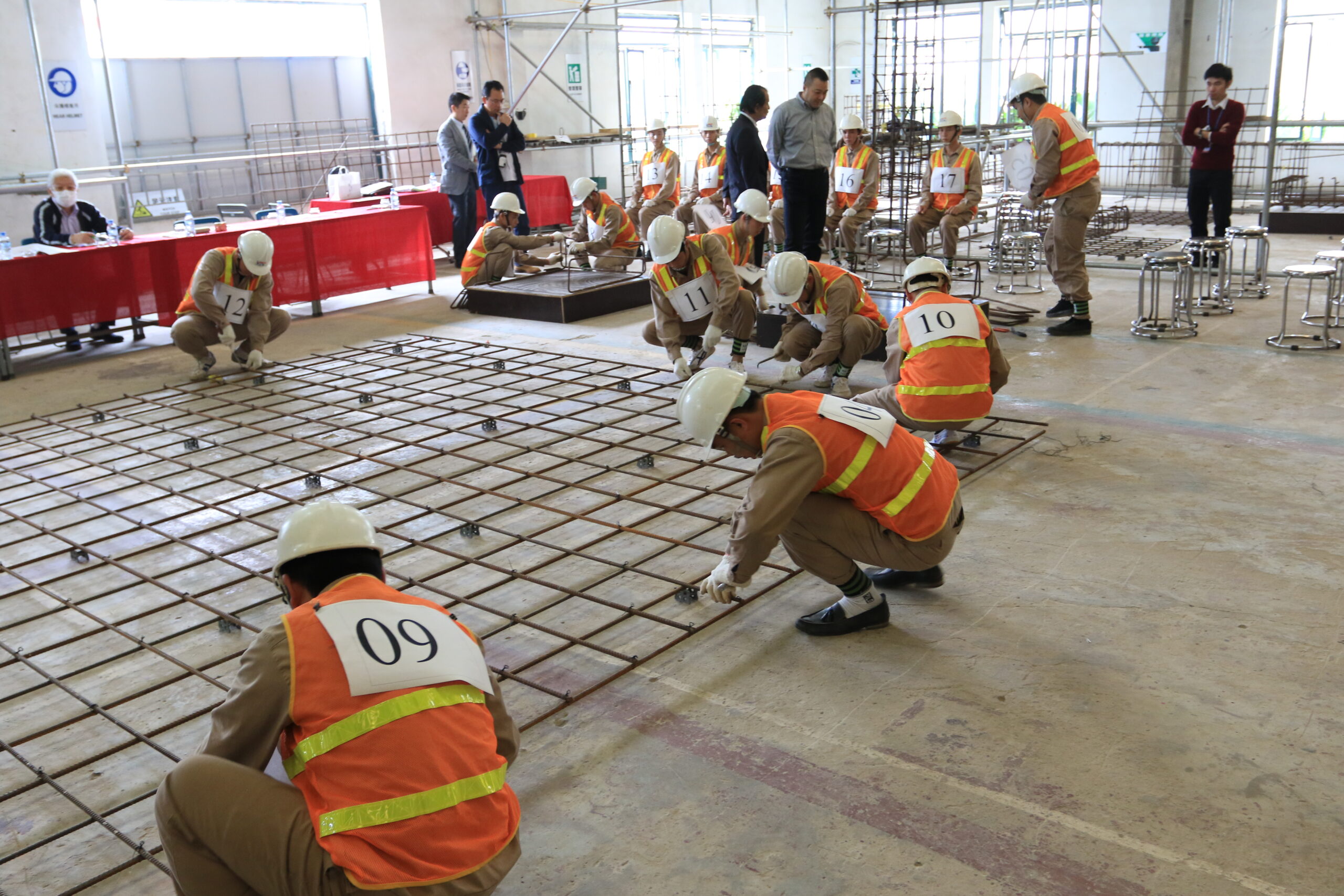
6.5. Steel Fixers
Steel fixers perform:
- Cutting reinforcement steel;
- Bending steel;
- Tying bars;
- Installing reinforcement according to drawings;
- Checking bar spacing;
- Maintaining concrete-cover requirements;
- Installing connections and supports.
6.6. Painters and Drywall Workers
Available positions include:
- Building painters;
- Putty workers;
- Surface-finishing workers;
- Drywall installers;
- Ceiling installers;
- Partition installers;
- Joint-treatment workers;
- Insulation workers;
- Soundproofing workers.
6.7. Electricians and Plumbers
Vietnam Manpower Agency can recruit:
- Construction electricians;
- Electrical installers;
- Water-supply plumbers;
- Drainage-system installers;
- Mechanical-electrical workers;
- Basic MEP workers.
Candidates are assessed according to the actual scope of work.
Tasks requiring a local professional license in the destination country must be clearly classified to prevent workers from being assigned duties beyond their legal authorization.
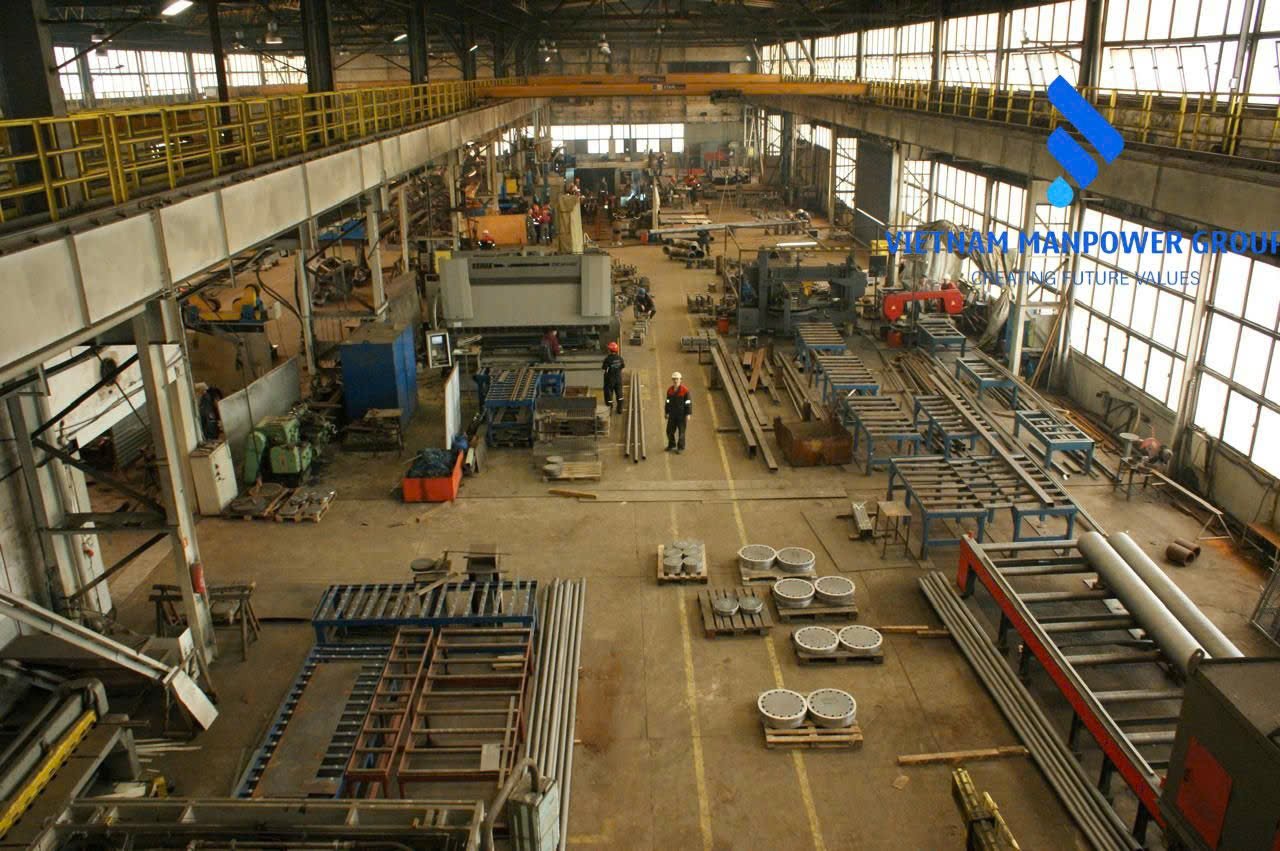
7. Mechanical and Steel-Structure Workers
Mechanical engineering requires workers who can read technical drawings, measure accurately, operate equipment, and follow safety procedures.
Vietnam Manpower Agency can supply:
- Welders;
- Steel-structure fabricators;
- Metal workers;
- Lathe operators;
- Milling-machine operators;
- CNC operators;
- Machine assemblers;
- Maintenance technicians;
- Pipe fitters;
- Sheet-metal workers;
- Cutting-machine operators;
- Quality-control inspectors.
Candidates are classified according to:
- Years of experience;
- Types of machines used;
- Materials processed;
- Drawing-reading ability;
- Ability to work independently;
- Technical responsibility.
For CNC workers, employers must clearly determine whether the position requires:
- Basic machine operation;
- Machine setup;
- Tool adjustment;
- Program modification;
- Full CNC programming.
Accurate classification helps employers establish appropriate salaries and responsibilities.
Maintenance workers may be assessed on their ability to:
- Identify faults;
- Replace components;
- Perform preventive maintenance;
- Lubricate equipment;
- Maintain service records;
- Follow maintenance schedules;
- Report technical issues.
8. Manufacturing and Factory Workers
Factories often need large numbers of workers while still requiring stability, productivity, accuracy, and discipline.
Vietnam Manpower Agency supplies workers to:
- Electronics factories;
- Mechanical factories;
- Component-manufacturing plants;
- Plastic factories;
- Packaging factories;
- Furniture factories;
- Building-material factories;
- Food-processing plants;
- Sorting and packaging centers;
- Industrial assembly lines.
8.1. Assembly-Line Workers
Assembly workers must be able to:
- Follow work instructions;
- Use hand tools;
- Assemble parts correctly;
- Check products at each stage;
- Work at a defined production speed;
- Report defects;
- Maintain workplace order.
8.2. Machine Operators
Depending on the equipment, candidates may be assessed on their ability to:
- Start and stop machines;
- Set operating parameters;
- Load materials;
- Monitor the production process;
- Inspect finished products;
- Detect defects;
- Clean equipment;
- Record production output;
- Perform basic maintenance.
8.3. Quality-Control Workers
Quality-control employees need to understand:
- Product acceptance criteria;
- Sampling methods;
- Measurement procedures;
- Defect classification;
- Non-conforming product handling;
- Quality records;
- Traceability.
8.4. Packaging Workers
Although packaging may be considered a general-labor position, it still requires:
- Speed;
- Accuracy;
- Product identification;
- Correct quantity control;
- Label checking;
- Traceability;
- Workplace hygiene;
- Proper pallet arrangement.
9. Food-Processing Workers
Food processing is one of the sectors in which Vietnam Manpower Agency can implement large-scale recruitment programs.
Common positions include:
- Meat-processing workers;
- Pork deboners;
- Meat cutters;
- Poultry-processing workers;
- Fish filleting workers;
- Seafood-processing workers;
- Vegetable-processing workers;
- Packaging workers;
- Cold-storage workers;
- Industrial-cleaning workers;
- Food-machine operators.
9.1. Meat Processing
Workers may be assessed on:
- Knife skills;
- Cutting speed;
- Deboning ability;
- Product yield;
- Hygiene awareness;
- Workplace safety;
- Ability to work in cold temperatures.
Cold-environment work requires appropriate health, physical endurance, and strict compliance with protective-equipment requirements.
9.2. Fish and Seafood Processing
Candidates may complete tests in:
- Fish filleting;
- Bone removal;
- Product grading;
- Trimming;
- Packaging;
- Weight control.
Accuracy has a direct effect on product yield and waste, so both productivity and quality must be evaluated.
9.3. Vegetable and Fruit Processing
Typical duties include:
- Sorting;
- Cleaning;
- Cutting;
- Peeling;
- Processing;
- Freezing;
- Packaging;
- Labeling.
Workers must understand:
- Personal-hygiene requirements;
- Foreign-object control;
- Cross-contamination prevention;
- Product traceability;
- Temperature control.
9.4. Food Safety
Before departure, workers receive guidance on:
- Hand washing and disinfection;
- Correct use of protective clothing;
- Separation of clean and unclean areas;
- Prevention of cross-contamination;
- Tool control;
- Temperature requirements;
- Reporting non-conforming products;
- Workplace sanitation.
10. Textile and Garment Workers
Vietnam has a highly developed textile and garment industry, creating a significant workforce for garment factories and light-manufacturing businesses.
Vietnam Manpower Agency can recruit:
- Single-needle sewing-machine operators;
- Overlock sewing workers;
- Kansai machine operators;
- Sample sewers;
- Fabric cutters;
- Pressing workers;
- Finishing workers;
- Quality-control workers;
- Sewing-machine maintenance technicians;
- Packaging workers.
Practical tests can be performed using a sample product or production stage provided by the employer.
In addition to sewing skills, candidates may be assessed on:
- Speed;
- Accuracy;
- Curved stitching;
- Corners;
- Zipper installation;
- Decorative seams;
- Complex components;
- Material handling.
11. Agricultural Workers
Vietnam has a long agricultural tradition and a large number of workers familiar with crop production, livestock farming, harvesting, and food preparation.
Vietnam Manpower Agency can provide workers for:
- Vegetable farms;
- Greenhouses;
- Fruit orchards;
- Flower farms;
- Dairy farms;
- Cattle farms;
- Pig farms;
- Poultry farms;
- Agricultural packing facilities;
- Agricultural food-processing factories;
- Seasonal agricultural projects.
11.1. Crop-Production Workers
Typical duties include:
- Soil preparation;
- Planting;
- Crop care;
- Pruning;
- Irrigation;
- Harvesting;
- Sorting;
- Packaging;
- Greenhouse cleaning;
- Basic equipment use.
11.2. Livestock Workers
Workers may receive training in:
- Feeding animals;
- Cleaning livestock areas;
- Monitoring animal conditions;
- Assisting with animal care;
- Collecting farm products;
- Using farm equipment;
- Following biosecurity procedures.
11.3. Agricultural Technology
European agriculture is highly mechanized.
Workers may therefore need training in:
- Agricultural machinery;
- Irrigation systems;
- Sensors;
- Automated feeding systems;
- Climate-control systems;
- Production recording;
- Traceability procedures.
12. Worker Selection Standards
The quality of an international workforce program depends directly on its candidate-entry standards.
Vietnam Manpower Agency develops selection criteria based on the requirements of each employer.
12.1. Professional Experience
Candidates must clearly explain:
- Previous employers;
- Employment periods;
- Job titles;
- Main duties;
- Machines and tools used;
- Products completed;
- Working environment;
- Reasons for leaving.
12.2. Practical Skills
Candidates for technical occupations must complete practical testing.
Results may be recorded through:
- Evaluation forms;
- Photographs;
- Videos;
- Employer observation;
- Technical-expert assessment.
12.3. Health
Workers must satisfy the health requirements of:
- Vietnamese regulations;
- The destination country;
- The employer;
- The specific occupation.
Workers in the following environments require particularly careful screening:
- Work at height;
- Confined spaces;
- Cold-storage facilities;
- High-noise workplaces;
- Heavy industrial environments;
- Physically demanding jobs.
12.4. Attitude and Discipline
Vietnam Manpower Agency evaluates:
- Punctuality;
- Ability to follow instructions;
- Teamwork;
- Safety awareness;
- Ability to work under pressure;
- Employment stability;
- Motivation;
- Ability to live away from family;
- Respect for company rules.
12.5. Foreign-Language Ability
Not every position requires advanced language skills. However, workers need to understand:
- Safety instructions;
- Workplace commands;
- Technical vocabulary;
- Basic daily communication;
- Emergency instructions.
Language courses are designed according to job requirements rather than focusing only on grammar.
13. Professional Manpower-Supply Process
Step 1: Receive the Employer’s Recruitment Requirements
The employer provides:
- Required number of workers;
- Job positions;
- Job descriptions;
- Salary;
- Working hours;
- Overtime arrangements;
- Accommodation conditions;
- Contract duration;
- Experience requirements;
- Skill standards;
- Required arrival date.
Step 2: Conduct a Feasibility Assessment
Vietnam Manpower Agency evaluates:
- Candidate availability;
- Recruitment difficulty;
- Training duration;
- Work-permit requirements;
- Legal procedures;
- Expected schedule.
When the original criteria do not match the available labor market, both parties can discuss reasonable adjustments.
Step 3: Sign a Cooperation Agreement
The agreement should clearly define:
- Responsibilities of each party;
- Candidate requirements;
- Fees and costs;
- Recruitment schedule;
- Replacement conditins;
- Post-arrival support;
- Procedures for handling unexpected issues.
Step 4: Launch Recruitment
Recruitment information is communicated clearly to candidates.
Workers must understand:
- The job;
- Expected income;
- Workplace;
- Contract duration;
- Working conditions;
- Legal fees and costs;
- Employer requirements.
Step 5: Screen Candidate Documents
Applicants who do not meet the basic requirements are removed before practical testing or employer interviews.
Step 6: Conduct Practical Skill Tests
Tests are completed under the supervision of:
- Technical experts;
- Training instructors;
- Employer representatives;
- Authorized assessors.
Step 7: Organize Employer Interviews
Employers may interview candidates:
- Directly in Vietnam;
- Through video conferencing;
- Through a combination of recorded tests and live interviews.
Step 8: Provide Supplementary Training
Successful candidates receive training in:
- Technical skills;
- Foreign language;
- Occupational safety;
- Workplace discipline;
- Cultural orientation;
- Employer-specific procedures.
Step 9: Prepare Legal Documents
Vietnam Manpower Agency coordinates with the employer and authorized partners in the destination country to prepare required documents.
Step 10: Organize Worker Departure
Workers receive guidance regarding:
- Travel schedules;
- Baggage;
- Airport procedures;
- Important documents;
- Contact information;
- Arrival arrangements.
Step 11: Monitor the Probation Period
During the initial employment period, employer feedback is collected so that workers can receive timely support.
Step 12: Manage and Support Workers During the Contract
Vietnam Manpower Agency maintains a communication channel to support issues related to:
- Employment;
- Workplace communication;
- Accommodation;
- Daily life;
- Contract implementation;
- Emergency situations.
14. Legal Compliance and Protection of All Parties
Sending Vietnamese workers overseas is a regulated business activity in Vietnam.
The activity is governed by the Law on Vietnamese Guest Workers Working Abroad under Contracts and related regulations.
Companies providing overseas employment services must satisfy legal conditions and obtain the required license from the competent Vietnamese authority.
Vietnam Manpower Agency considers legal transparency an essential part of service quality.
Important matters that must be clearly established include:
- Legal status of all parties;
- Manpower-supply license;
- Recruitment and supply agreement;
- Employment contract;
- Salary;
- Working hours;
- Overtime;
- Insurance;
- Accommodation;
- Transportation;
- Taxes;
- Occupational safety;
- Complaint procedures;
- Contract-termination responsibilities;
- Repatriation conditions.
Every European country has its own system for:
- Work permits;
- Residence permits;
- Recruitment of foreign workers;
- Professional licensing;
- Social insurance;
- Taxation;
- Labor protection.
For this reason, each project must be reviewed according to the regulations of the destination country at the time of implementation.
15. Benefits for European Employers
15.1. Access to Additional Skilled Labor
Vietnam Manpower Agency helps employers access candidates beyond the local labor market.
This is particularly useful for positions that are difficult to fill or projects requiring large numbers of workers within a limited period.
15.2. Reduced Recruitment Time
Instead of building an independent recruitment network in Vietnam, employers can use the established system of Vietnam Manpower Agency.
Advertising, sourcing, screening, testing, and training are organized according to a coordinated plan.
15.3. Optimization of Total Workforce Costs
Cost efficiency should not be evaluated only on the basis of salary.
Employers should also consider:
- Advertising costs;
- Interview costs;
- Time that positions remain vacant;
- Training expenses;
- Production delays;
- Employee turnover;
- Replacement recruitment;
- Product defects;
- Workplace accidents;
- Management costs.
An effective recruitment and preparation process can reduce total workforce costs across the entire employment cycle.
15.4. Improved Production Planning
When employers know the expected recruitment, training, documentation, and arrival schedules, they can align workforce plans with production and project timelines.
15.5. Employer-Specific Training
Employers may provide:
- Procedures;
- Drawings;
- Videos;
- Product samples;
- Technical standards;
- Safety instructions.
Vietnam Manpower Agency can then organize customized training in Vietnam.
15.6. Reduced Risk of Hiring Unsuitable Workers
Practical testing, multi-stage interviews, and experience verification reduce the risk of recruiting candidates who cannot perform the required job.
15.7. A Dedicated Coordination Partner in Vietnam
Employers do not have to manage each candidate separately.
Vietnam Manpower Agency acts as the main coordination point for:
- Recruitment;
- Documentation;
- Training;
- Communication;
- Departure preparation;
- Post-arrival support.
16. Principles for a Successful Recruitment Program
16.1. Job Descriptions Must Be Accurate
The same job title may involve very different duties in different companies.
Employers should provide:
- Detailed job descriptions;
- Photographs;
- Videos;
- Technical drawings;
- Product samples;
- Productivity expectations.
16.2. Salaries and Conditions Must Be Transparent
Workers need to understand:
- Basic salary;
- Overtime;
- Taxes;
- Insurance;
- Accommodation costs;
- Food costs;
- Expected net income;
- Deductions.
16.3. Requirements Should Match the Actual Job
Unnecessarily high requirements for experience or certificates can extend recruitment time without creating additional value.
16.4. Pre-Departure Training Is Essential
Training before departure reduces adaptation time and helps prevent basic mistakes during probation.
16.5. Employers Need an Arrival and Onboarding Plan
Employers should arrange:
- A workplace supervisor;
- Safety training;
- Initial orientation;
- Work instructions;
- Suitable accommodation;
- Transportation guidance.
16.6. Fair Working Conditions Must Be Ensured
Salary, working hours, treatment, and living conditions must comply with the laws of the destination country.
16.7. Feedback Channels Should Be Maintained
Small issues should be resolved early before they develop into serious disputes.
17. Cooperation Models with Vietnam Manpower Agency
Recruitment by Specific Order
This model is suitable for employers that need a defined number of workers for a factory, shipyard, farm, or construction project.
Project-Based Recruitment
This option applies to:
- Shipbuilding projects;
- Construction projects;
- Industrial installation;
- Shutdown maintenance;
- Mechanical assembly;
- Seasonal production.
Regular Recruitment
This model is suitable for companies or groups that need several recruitment rounds during the year.
Development of a Reserve Candidate Pool
Vietnam Manpower Agency can recruit and train a reserve group of candidates for future employer selection.
Employer-Standard Training Programs
The employer provides procedures and standards. Vietnam Manpower Agency organizes:
- Training;
- Testing;
- Evaluation;
- Reporting.
18. Why Choose Vietnam Manpower Agency?
Vietnam Manpower Agency aims to become a long-term workforce partner rather than simply a candidate-introduction service.
Our core values and capabilities include:
- More than 20 years of experience in international workforce services;
- More than 30,000 workers recruited, trained, and supplied according to company records;
- A nationwide recruitment network;
- Capacity for large-scale recruitment;
- Practical trade-testing systems;
- Employer-specific training;
- Experience across multiple industries;
- Legal-document and procedure support;
- Foreign-language, safety, and orientation training;
- Support after workers leave Vietnam;
- Transparent processes;
- Protection of the interests of both employers and workers.
The success of a manpower project should not be measured only by the number of workers who depart from Vietnam.
More important results include:
- Workers meeting job requirements;
- Employers maintaining stable production;
- Projects being completed on schedule;
- Low worker turnover;
- Effective communication;
- Long-term cooperation between the parties.
19. Frequently Asked Questions About Vietnam Manpower Agency
What Types of Workers Does Vietnam Manpower Agency Supply?
Vietnam Manpower Agency supplies:
- Welders;
- Mechanical workers;
- Construction workers;
- Electricians;
- Pipe fitters;
- Steel fabricators;
- Shipbuilding workers;
- Factory workers;
- Food-processing workers;
- Garment workers;
- Agricultural workers;
- Machine operators;
- Packaging workers.
Can Vietnam Manpower Agency Recruit Large Numbers of Workers?
Yes.
Recruitment capacity depends on:
- Occupation;
- Technical standards;
- Salary;
- Working conditions;
- Destination country;
- Required recruitment timeline.
How Long Does Recruitment Take?
The schedule depends on:
- Number of workers;
- Occupation;
- Candidate availability;
- Training requirements;
- Work-permit procedures;
- Legal requirements of the destination country.
A realistic schedule can be provided after a complete analysis of the recruitment order.
Can Employers Test Workers Directly?
Yes.
Employer representatives may travel to Vietnam to organize practical tests and interviews. Employers may also participate through online interviews or video assessments.
Does Vietnam Manpower Agency Provide Customized Training?
Yes.
Training can be designed based on the employer’s:
- Technical drawings;
- Procedures;
- Materials;
- Equipment;
- Quality standards;
- Sample products;
- Productivity requirements.
Do Welders Have International Certificates?
Candidates may be selected or tested according to standards such as:
- ISO 9606;
- AWS D1.1;
- ASME Section IX;
- EN standards;
- Other project-specific standards.
The exact certification requirement must be agreed in advance with the employer and the authorized assessment organization.
Do Workers Receive Foreign-Language Training?
Yes.
Training focuses on:
- Workplace communication;
- Safety commands;
- Technical vocabulary;
- Daily-life situations;
- Emergency communication.
Does Vietnam Manpower Agency Assist with Work-Permit Procedures?
Vietnam Manpower Agency coordinates the preparation of documents in Vietnam and works with the employer or an authorized partner in the destination country.
The exact procedure depends on the laws of each country.
Can Employers Review Candidate Documents and Test Videos?
Yes.
Candidate files, evaluation sheets, photographs, and practical-test videos may be provided according to the cooperation agreement and applicable personal-data-protection regulations.
Is There a Worker-Replacement Policy?
Replacement conditions are defined in the cooperation agreement and depend on:
- The reason for replacement;
- The time at which the problem occurs;
- The responsibilities of the parties;
- Contractual terms.
Does Vietnam Manpower Agency Provide Post-Arrival Support?
Yes.
Vietnam Manpower Agency maintains communication channels, receives employer feedback, coordinates solutions, and supports workers during the employment contract.
Are Vietnamese Workers Suitable for European Workplaces?
Suitability depends on:
- Proper candidate selection;
- Technical preparation;
- Working conditions;
- Workplace management;
- Safety training;
- Foreign-language training;
- Cultural orientation.
Vietnam Manpower Agency focuses on preparing workers carefully before departure.
Which Countries Can Recruit Vietnamese Workers?
Recruitment availability depends on:
- National labor laws;
- Foreign-worker programs;
- Work-permit systems;
- Current employer demand.
Every destination market must be evaluated separately at the time of recruitment.
How Are Recruitment Costs Calculated?
Costs depend on:
- Number of workers;
- Occupations;
- Training requirements;
- Practical testing;
- Documentation;
- Travel;
- Scope of service;
- Destination country.
Vietnam Manpower Agency prepares a detailed proposal after receiving complete recruitment information.
What Documents Must the Employer Provide?
Employers generally need to provide:
- Business registration documents;
- Information about the legal representative;
- Recruitment demand;
- Job descriptions;
- Employment-contract templates;
- Salary information;
- Working conditions;
- Accommodation information;
- Legal documents required by the destination market.
20. Are You Ready to Recruit Skilled Vietnamese Workers?
If your business is experiencing difficulty recruiting:
- Welders;
- Construction workers;
- Mechanical workers;
- Electricians;
- Factory employees;
- Food-processing workers;
- Agricultural workers;
- Other technical personnel,
Vietnam Manpower Agency can develop a recruitment plan based on your actual business requirements.
The cooperation process begins by determining:
- Which positions does your company need to fill?
- How many workers are required?
- What duties will the workers perform?
- Which technical standards apply?
- What salary and employment benefits are offered?
- In which country and location will the workers be employed?
- When must the workers arrive?
- Which parts of the recruitment process should Vietnam Manpower Agency manage?
After receiving this information, our professional team will evaluate:
- Candidate availability;
- Proposed skill-testing standards;
- Training requirements;
- Legal-document procedures;
- Implementation schedule.
Employers may also send representatives to Vietnam to:
- Visit our training facilities;
- Review infrastructure;
- Interview candidates;
- Observe practical skill tests;
- Organize direct recruitment examinations.
Conclusion
The shortage of technical and industrial workers is creating serious pressure for many European employers.
While production, construction, shipbuilding, food processing, and agricultural activities continue to grow, local recruitment capacity is becoming increasingly limited.
Vietnam, with its large labor force and strong experience in manufacturing, construction, mechanical engineering, shipbuilding, agriculture, textiles, and food processing, can become a strategic recruitment source for international companies.
Vietnam Manpower Agency provides a comprehensive solution covering:
- Candidate sourcing;
- Document screening;
- Practical skill testing;
- Customized training;
- Foreign-language preparation;
- Occupational safety education;
- Legal-document coordination;
- Pre-departure orientation;
- Post-arrival support.
With more than 20 years of experience, a nationwide recruitment network, and the ability to implement projects across multiple industries, Vietnam Manpower Agency aims to become a trusted workforce partner for European and international employers.
We do not simply provide a number of workers.
We focus on developing a workforce that is skilled, properly prepared, disciplined, and suitable for the actual requirements of each employer.
Contact Vietnam Manpower Agency today for professional advice on recruiting Vietnamese workers for your factory, shipyard, construction site, farm, or international project.
Vietnam Manpower Agency – Connecting Vietnam’s Skilled Workers with International Employment Opportunities.
Please contact us for more details:
☎ Whatsapp: +84 982 0303 66
🌐 Website: vietnammanpower.group
📩 Email: vietnammanpower18@gmail.com
We are happy to assist you!