


Vietnamese Shipbuilding Workers – International Shipbuilding Manpower Solutions
Vietnamese Shipbuilding Workers: High-Quality Manpower Solutions for International Shipyards
The global shipbuilding industry is entering a new period of development, driven by increasing demand for liquefied natural gas carriers, container ships, oil tankers, specialized vessels, offshore structures, and marine transportation using cleaner energy.
In addition to investing in technology and modern production systems, many shipyards are facing another major challenge: a shortage of experienced technical workers.
The positions most commonly affected by labor shortages include structural welders, pipe welders, hull assemblers, electricians, industrial painters, sandblasters, scaffolders, pipe fitters, and steel fabrication workers.
In this context, Vietnamese shipbuilding workers are becoming a promising manpower solution for shipyards, shipbuilding groups, marine engineering companies, and mechanical contractors worldwide.
Vietnam has not only a young and abundant workforce but also a network of vocational schools, training centers, and licensed manpower agencies capable of recruiting, screening, testing, and training workers according to the requirements of individual employers and projects.
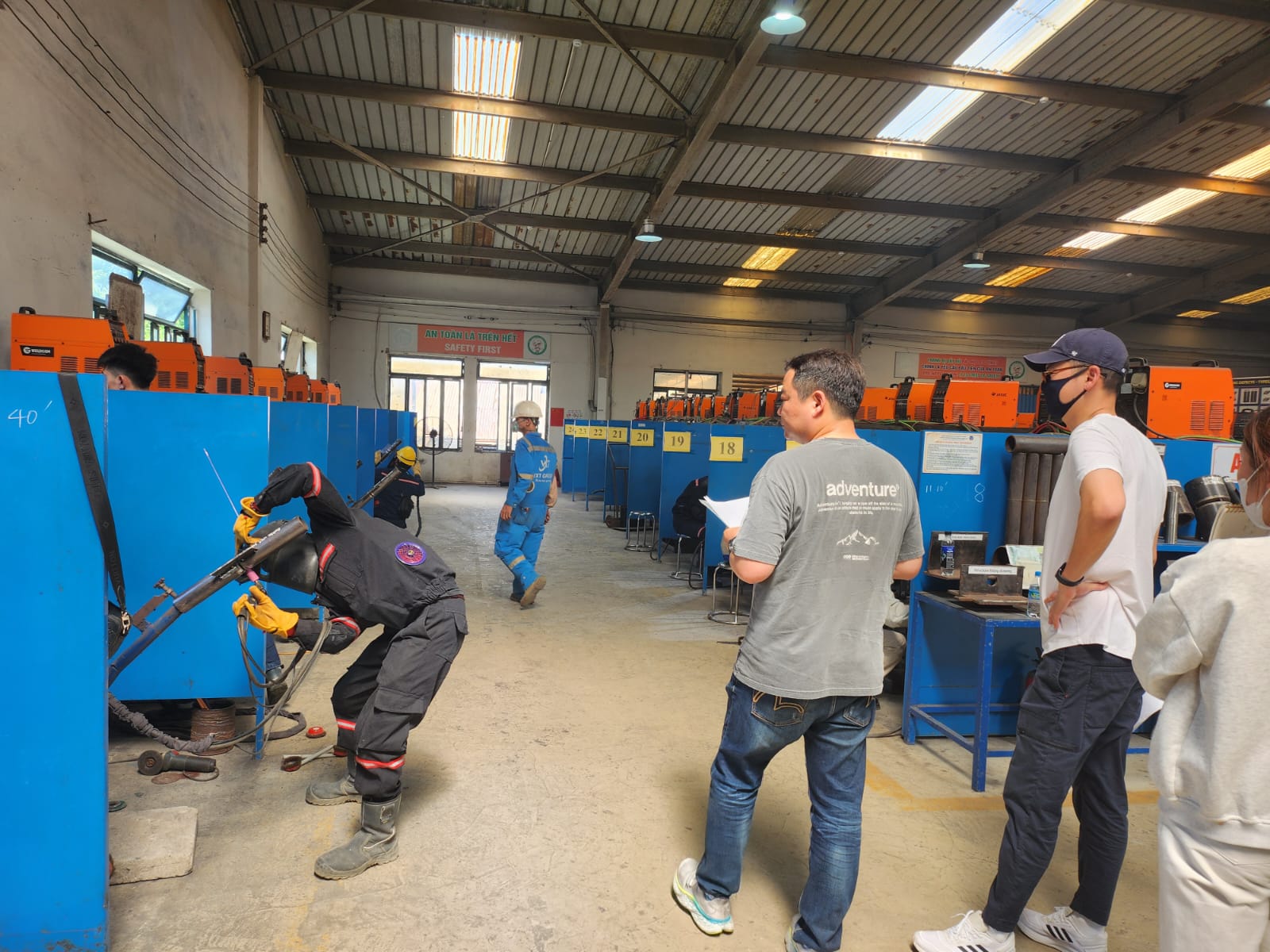
1. Vietnam’s Young, Dynamic, and Adaptable Workforce
Vietnam has significant advantages in terms of its young workforce, rapid vocational learning ability, and extensive experience in manufacturing, mechanical engineering, construction, shipbuilding, and heavy industry.
For many years, Vietnamese workers have been employed in Japan, Taiwan, South Korea, the Middle East, and various European countries.
According to figures published by the Government of Vietnam, by the end of 2025, the total number of Vietnamese workers sent abroad during the 2021–2025 period was estimated to reach approximately 636,000.
At the same time, around 860,000 Vietnamese workers were working overseas, primarily in Japan, Taiwan, South Korea, and several European countries.
In the first eight months of 2025 alone, more than 97,960 Vietnamese citizens went abroad to work under labor contracts.
Japan received more than 43,900 Vietnamese workers, Taiwan received more than 37,900, and South Korea received more than 8,920 workers.
These figures demonstrate that Vietnam has developed a relatively comprehensive ecosystem for international workforce recruitment, vocational training, documentation, foreign-language education, pre-departure orientation, and overseas worker management.
For the shipbuilding industry, Vietnamese workers offer several important advantages:
- Strong foundations in mechanical engineering, manufacturing, construction, and heavy industry.
- Ability to learn technical processes and production procedures quickly.
- Willingness to work in shifts and in industrial environments.
- Ability to receive training based on technical drawings, welding standards, and employer-specific procedures.
- Competitive recruitment and training costs.
- A large candidate pool that can be mobilized from different provinces and cities.
- Previous experience working in factories and international industrial projects.
- Strong adaptability to foreign working environments and corporate cultures.
These advantages allow international employers to consider Vietnam when seeking large numbers of skilled and semi-skilled workers for shipbuilding projects.
2. Vietnam’s Capacity to Supply Shipbuilding Workers
A professional shipbuilding manpower supply program involves much more than simply finding available workers.
The manpower supplier must understand each position, production method, working condition, technical standard, occupational safety requirement, and quality-control process used in the project.
Vietnamese manpower agencies can recruit and supply multiple categories of shipbuilding workers.
Shipbuilding Welders
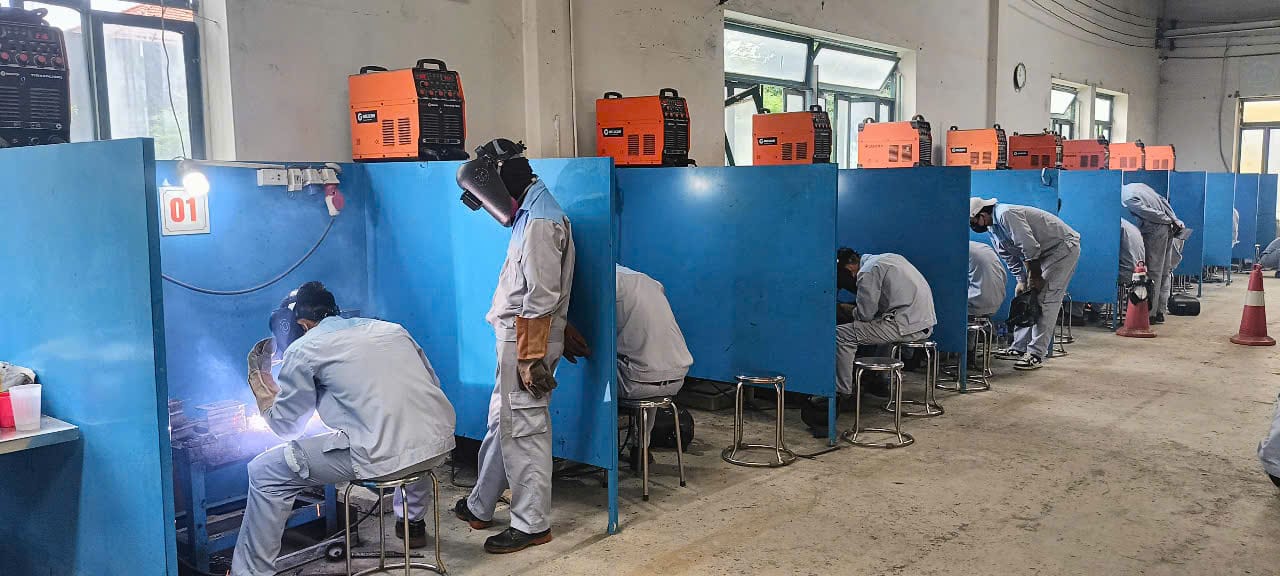
Welders are among the most frequently recruited workers in the shipbuilding industry.
Depending on the project, candidates may be required to pass welding tests in the 3G, 4G, or 6G positions, or equivalent positions under the standards applied by the shipyard.
Common welding methods include:
- Shielded Metal Arc Welding, or SMAW.
- MIG and MAG welding.
- Flux-Cored Arc Welding, or FCAW.
- Tungsten Inert Gas or Gas Tungsten Arc Welding, known as TIG or GTAW.
- Combined TIG and SMAW welding for pipe systems.
Vietnamese workers can be trained and tested according to international or employer-required standards, including:
- ISO 9606.
- AWS D1.1.
- ASME Section IX.
- EN welding standards.
- Project-specific welding procedures.
- Shipyard-specific technical standards.
Possessing a welding certificate does not necessarily replace a practical skills test.
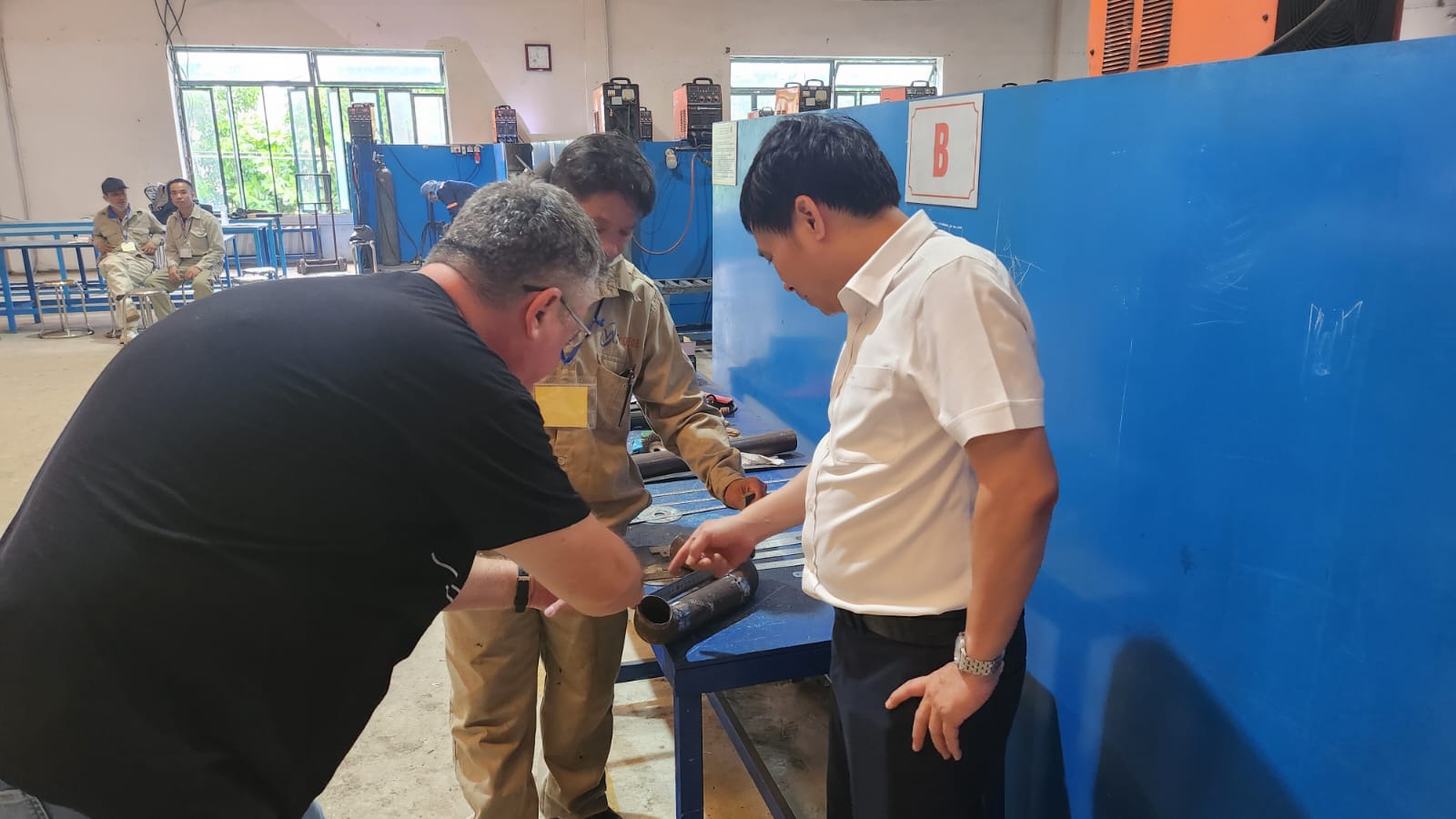
Most professional employers still conduct direct trade tests before selecting workers. These tests help confirm that candidates can achieve the required welding position, penetration, appearance, dimensional accuracy, and weld quality.
Pipe Welders and Pipe Fitters
Ship piping systems are highly complex and may include fuel lines, water systems, gas systems, firefighting systems, hydraulic systems, and other technical installations.
Pipe fitters and pipe welders may be required to perform the following tasks:
- Read technical drawings and isometric drawings.
- Measure, cut, prepare, and align pipes.
- Install flanges, valves, elbows, and other fittings.
- Control pipe alignment and installation tolerances.
- Coordinate with welders during the completion of pipe joints.
- Perform tack welding and preparation work.
- Follow pressure testing and system safety requirements.
- Identify pipe materials and installation codes.
- Work in narrow or confined spaces.
Pipe welders may also be required to pass a 6G welding test or another position specified by the employer.
Because pipe systems are essential to vessel safety and operation, employers normally apply strict technical and quality requirements to these positions.
Hull Assemblers and Steel Fabrication Workers
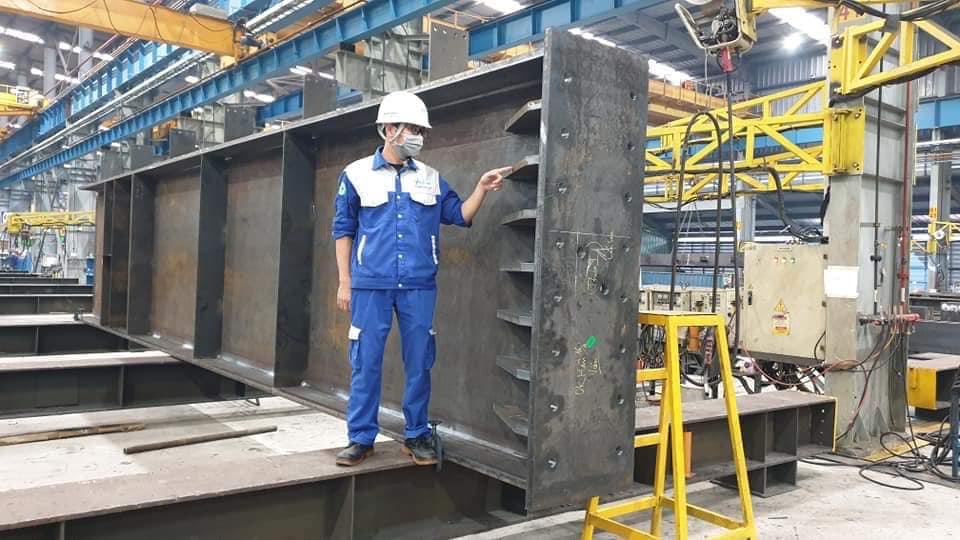
Hull assemblers and steel fabrication workers participate directly in the fabrication and installation of vessel blocks, sections, decks, bulkheads, frames, and structural components.
Their duties commonly include:
- Reading fabrication and assembly drawings.
- Measuring and marking steel plates and components.
- Cutting, grinding, fitting, and aligning steel materials.
- Installing frames, bulkheads, decks, and reinforcement structures.
- Checking dimensions and assembly tolerances.
- Coordinating with welders to control deformation.
- Using lifting devices and mechanical tools safely.
- Supporting the assembly of ship blocks and sections.
- Performing tack welding when required.
- Following production and quality-control procedures.
Experienced hull assemblers must understand the relationship between technical drawings and the physical structure of the vessel.
They must also know how to identify and correct alignment errors before final welding is carried out.
Marine Electricians
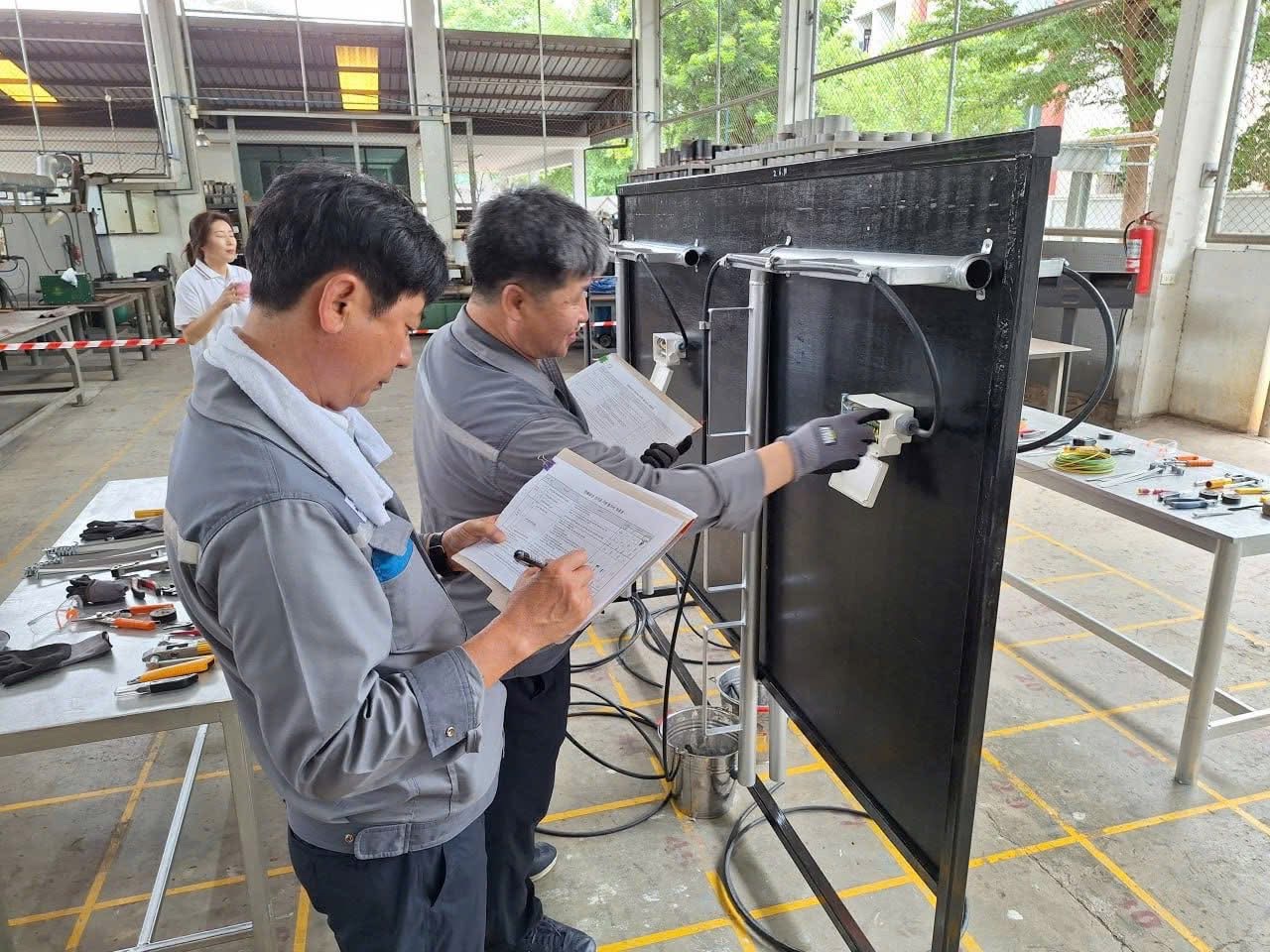
Marine electricians are responsible for cable installation, cable tray installation, electrical panel connections, lighting systems, sensors, motors, control systems, and other electrical equipment installed on vessels.
Candidates should have knowledge and experience in:
- Electrical safety.
- Reading electrical diagrams.
- Pulling and arranging electrical cables.
- Installing cable trays.
- Cable identification and numbering.
- Connecting panels and electrical devices.
- Installing lighting systems.
- Using electrical measuring and testing instruments.
- Checking electrical connections.
- Following lockout and tagout procedures.
For higher-level technical positions, employers may require a vocational certificate, college diploma, or several years of practical shipyard experience.
Marine electricians must work carefully because electrical systems on ships operate in environments affected by vibration, moisture, heat, and restricted space.
Industrial Painters, Sandblasters, and Surface Treatment Workers
Marine painting is not the same as ordinary building painting.
Ship painters and surface treatment workers must understand surface preparation, sandblasting, coating application, paint mixing, film thickness control, and work in confined spaces.
Their duties may include:
- Cleaning and preparing steel surfaces.
- Removing rust, oil, dust, and contaminants.
- Operating sandblasting or shot-blasting equipment.
- Mixing paint according to technical ratios.
- Applying primer, intermediate, and finishing coatings.
- Measuring wet-film and dry-film thickness.
- Protecting areas that should not be painted.
- Working with protective equipment in confined spaces.
- Following ventilation and fire-prevention procedures.
- Inspecting and repairing coating defects.
Hanwha Ocean previously introduced a virtual-reality spray-painting training center that offered Vietnamese-language support for Southeast Asian workers.
This demonstrates that major Korean shipyards are paying increasing attention to technical training and occupational safety for their international workforce.
Reference:
https://www.koreatimes.co.kr/www/tech/2024/12/129_362098.html
Shipyard Scaffolders
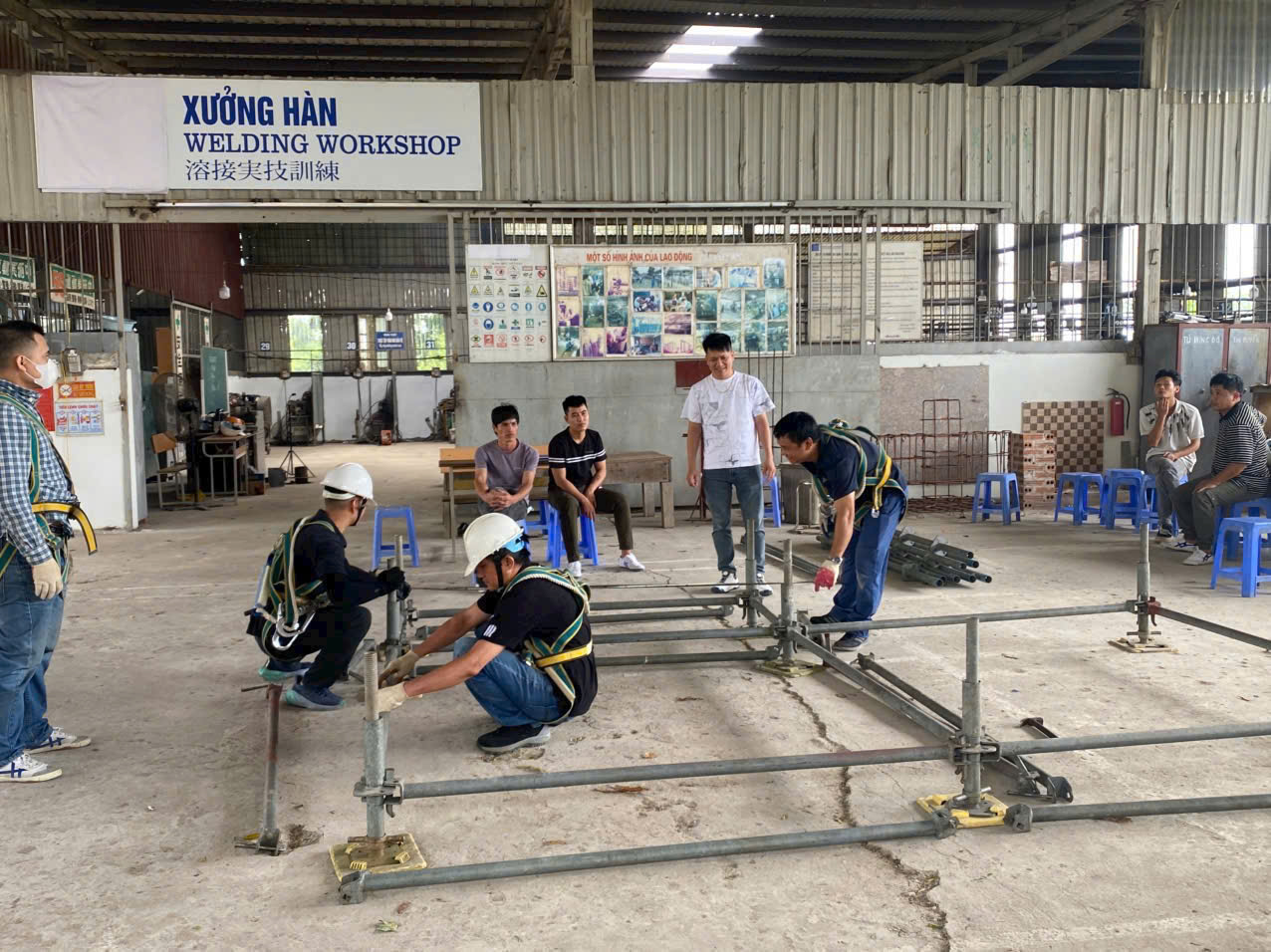
Shipyard scaffolders install temporary working platforms for welding, painting, electrical installation, inspection, and assembly activities in elevated or difficult-to-access areas.
Scaffolders must be trained in:
- Scaffold structures and load capacity.
- Scaffold erection procedures.
- Scaffold inspection.
- Scaffold dismantling.
- Working at height.
- Using safety harnesses and fall-protection equipment.
- Preventing falling objects.
- Controlling hazardous working areas.
- Installing safe access routes.
- Coordinating with other production teams.
Shipyard scaffolding differs from many standard construction projects because scaffold systems may be installed inside vessel blocks, tanks, engine rooms, and other confined or irregularly shaped areas.
3. Opportunities to Supply Workers to South Korea’s Shipbuilding Industry During 2022–2026
South Korea is one of the world’s leading shipbuilding centers.
Major groups such as HD Hyundai, Hanwha Ocean, and Samsung Heavy Industries operate shipyards capable of constructing commercial vessels, LNG carriers, oil tankers, container ships, specialized vessels, and offshore structures.
During the 2022–2026 period, the South Korean shipbuilding industry increased its recruitment of foreign workers to address shortages of skilled technical labor.
According to figures published in 2023, Vietnamese nationals accounted for 55.1% of the 1,595 foreigners who received E-7 visas for shipbuilding-related activities between January 2022 and January 2023.
This represented approximately 879 Vietnamese workers.
During the first six months of 2023, the South Korean Government supported the addition of 10,104 workers to domestic shipyards, including approximately 8,400 foreign workers.
Reference:
https://en.yna.co.kr/view/AEN20230830002700320
Also in 2023, the Employment Permit System, or EPS, organized the recruitment and selection of Vietnamese workers for South Korea’s shipbuilding industry.
The expected quota included 1,149 successful candidates.
The recruited occupations included:
- Welding.
- Scaffolding.
- Grinding.
- Insulation work.
- Pipe installation.
- Mechanical work.
- Carpentry.
- Electrical work.
Candidates were required to pass the Korean-language EPS-TOPIK examination before participating in additional skills and competency assessments.
Reference:
https://vss.gov.vn/english/news/Pages/vietnam-social-security.aspx?CateID=0&ItemID=11735
In 2024, the South Korean Ministry of Employment and Labor continued allocating foreign workers to the shipbuilding sector.
During the second foreign-worker application period of 2024, 1,824 positions were allocated specifically to the shipbuilding industry.
Reference:
https://www.moel.go.kr/news/notice/noticeView.do?bbs_seq=20240401048
Hanwha Ocean signed a memorandum of understanding with Vietnam’s Ministry of Industry and Trade concerning cooperation in the training and recruitment of Vietnamese shipbuilding workers.
The program aimed to improve the capacity of vocational training institutions and develop a stable source of skilled workers for the company.
HD Hyundai has also established long-term cooperation and manufacturing operations in Vietnam.
HD Hyundai Vietnam Shipbuilding in Khanh Hoa employs approximately 5,000 local workers and has developed extensive newbuilding capacity over many years.
Reference:
https://en.yna.co.kr/view/AEN20230614002100320
The official recruitment website of HD Hyundai Vietnam Shipbuilding regularly announces vacancies for welders and painters.
This indicates that Vietnam has developed a substantial shipbuilding workforce trained directly in a Korean-technology production environment.
Reference:
https://www.hd-hvs.com/recruit/information.jsp
Samsung Heavy Industries has also increased its employment of foreign workers to address manpower shortages.
At the end of 2022, Samsung Heavy Industries and its subcontractors employed a total of 782 foreign workers and planned to increase the number to approximately 1,200 in 2023.
Reference:
https://en.yna.co.kr/view/AEN20230102005600320
These figures do not necessarily mean that each individual shipbuilding group recruited thousands of Vietnamese workers.
However, they clearly demonstrate that major South Korean shipbuilding groups have expanded international recruitment and that Vietnam has become one of the most important sources of foreign shipbuilding manpower.
4. Legal Recruitment, Screening, and Manpower Supply Procedures
The deployment of Vietnamese workers to foreign countries must comply with Vietnam’s Law No. 69/2020/QH14 on Vietnamese workers working abroad under contracts.
The law regulates:
- Responsibilities of licensed manpower service companies.
- Rights and obligations of workers.
- Labor supply contracts.
- Employment contracts.
- Vocational training.
- Foreign-language training.
- Pre-departure orientation.
- Overseas worker management.
- Worker protection.
- Service fees and related financial obligations.
Reference:
https://vbpl.moj.gov.vn/botuphap/Pages/vbpq-toanvan.aspx?ItemID=146643&Keyword=
Since March 1, 2025, the Department of Overseas Labour, internationally known as DOLAB, has operated under Vietnam’s Ministry of Home Affairs.
DOLAB performs state-management functions related to Vietnamese workers employed abroad.
Its responsibilities include:
- Granting and revoking licenses.
- Reviewing and registering labor supply contracts.
- Managing overseas employment activities.
- Supervising worker-source preparation.
- Managing pre-departure orientation.
- Protecting the lawful rights and interests of Vietnamese workers abroad.
- Inspecting licensed manpower agencies.
- Providing information about overseas labor markets.
Reference:
https://dolab.moha.gov.vn/New/DutiesAndResponsibilities.aspx?LIST_ID=247
A professional shipbuilding worker recruitment process should include the following steps:
Step 1: Receiving the Employer’s Manpower Request
The manpower supplier receives detailed information about:
- Required number of workers.
- Occupational categories.
- Job descriptions.
- Technical standards.
- Required experience.
- Foreign-language requirements.
- Work location.
- Contract duration.
- Salary and benefits.
- Mobilization schedule.
Step 2: Reviewing the Employer and Employment Conditions
The manpower supplier reviews the employer’s legal status, project location, working conditions, accommodation arrangements, salary, insurance, occupational safety, and other employment terms.
Step 3: Registering the Labor Supply Contract
The manpower agency completes the required procedures for registering or obtaining approval for the overseas labor supply contract from the competent Vietnamese authority.
Step 4: Publishing Transparent Recruitment Information
Recruitment information should be announced publicly and clearly.
Candidates must receive accurate information about the job, employer, country of employment, salary, costs, contract period, accommodation, and working conditions.
Step 5: Screening Candidates
The manpower supplier checks:
- Personal documentation.
- Age and physical condition.
- Work experience.
- Vocational qualifications.
- Criminal and personal records where required.
- Ability to work in an industrial environment.
- Commitment to completing the employment contract.
Step 6: Conducting Trade Tests
Candidates participate in theoretical and practical skills tests.
For welders, the test may include welding positions, welding methods, material types, and inspection requirements.
For hull assemblers and pipe fitters, the test may include reading drawings, measuring, cutting, fitting, and alignment.
Step 7: Providing Additional Training
Selected candidates may receive additional training based on the specific requirements of the employer or shipyard.
Training may cover:
- Welding procedures.
- Technical drawings.
- Pipe fitting.
- Structural assembly.
- Electrical installation.
- Painting and surface preparation.
- Occupational safety.
- Quality-control requirements.
Step 8: Foreign-Language and Pre-Departure Training
Workers receive foreign-language instruction, safety training, cultural orientation, and information about the destination country.
Step 9: Completing Contracts, Visas, Insurance, and Departure Documents
The manpower supplier supports workers in completing:
- Employment contracts.
- Visa applications.
- Work permits.
- Insurance arrangements.
- Medical examinations.
- Flight arrangements.
- Pre-departure documents.
Step 10: Managing and Supporting Workers Overseas
The manpower agency should maintain contact with workers and employers throughout the employment period.
Support may include:
- Contract interpretation.
- Workplace communication.
- Assistance with labor disputes.
- Medical or accident support.
- Coordination with local authorities.
- Support for contract completion and repatriation.
By 2026, Vietnam’s regulatory system continued to be updated through Circular No. 09/2026/TT-BNV, which amended several regulations guiding the Law on Vietnamese Workers Working Abroad under Contracts.
Reference:
https://vanban.chinhphu.vn/?classid=1&docid=218201&orggroupid=4&pageid=27160
International employers should select only manpower suppliers holding valid licenses and should verify their information through DOLAB’s official system.
Employers should not recruit workers through unlicensed individuals, unauthorized brokers, or organizations that cannot demonstrate legal permission to provide overseas manpower services.
5. Cultural Orientation, Industrial Discipline, and Safety Training Before Departure
For shipbuilding workers, technical skills represent only one part of the preparation process.
Workers must also receive training in culture, law, discipline, workplace behavior, and living conditions in the destination country.
A comprehensive pre-departure orientation program should include:
- Labor laws of Vietnam and the destination country.
- Rights and obligations under the employment contract.
- Shipyard rules and corporate culture.
- Occupational safety in shipbuilding facilities.
- Working at height.
- Working in confined spaces.
- Fire and explosion prevention.
- Electrical safety.
- Hot-work procedures.
- Emergency reporting procedures.
- Communication with supervisors and colleagues.
- Local customs and cultural practices.
- Income and personal financial management.
- Insurance and healthcare arrangements.
- Immigration and residence regulations.
- Support channels in the event of disputes or emergencies.
DOLAB is responsible for managing pre-departure orientation activities and guiding licensed agencies in preparing workers before overseas employment.
Reference:
https://dolab.moha.gov.vn/New/DutiesAndResponsibilities.aspx?LIST_ID=247
Serious and well-organized training helps workers adapt more quickly, reduce workplace violations, improve productivity, and minimize the risk of resignation or early contract termination.
Industrial Work Discipline
Workers should be trained to understand the importance of:
- Arriving at work on time.
- Following shift schedules.
- Complying with supervisors’ instructions.
- Maintaining tools and equipment.
- Keeping workplaces clean and organized.
- Reporting defects and safety risks immediately.
- Following quality-control procedures.
- Cooperating with multicultural teams.
- Avoiding alcohol and prohibited substances at work.
- Respecting confidentiality and company property.
Corporate Culture Training
Different employers may have different management systems and workplace expectations.
Workers should understand:
- Reporting structures.
- Communication procedures.
- Teamwork requirements.
- Production targets.
- Quality expectations.
- Workplace conduct.
- Disciplinary procedures.
- Respect for colleagues from different countries and cultures.
This training benefits both workers and employers by reducing misunderstandings and improving long-term labor stability.
6. Positive Benefits of Employing Vietnamese Shipbuilding Workers
A Relatively Abundant Recruitment Source
Vietnam can recruit candidates from:
- Domestic shipyards.
- Mechanical workshops.
- Steel fabrication factories.
- Construction companies.
- Vocational training institutions.
- Technical colleges.
- Workers returning from Japan, South Korea, Taiwan, and Europe.
- Workers with previous experience in heavy industry and manufacturing.
This provides employers with access to both newly trained candidates and experienced workers.
Ability to Supply Multiple Occupational Groups
A professional Vietnamese manpower supplier can recruit welders, pipe fitters, electricians, painters, scaffolders, steel fabricators, and hull assemblers at the same time.
This allows the employer to reduce the time and cost associated with working with several different recruitment partners.
It also helps ensure more consistent training, documentation, mobilization, and worker management.
Training According to Project Requirements
Candidates can be trained according to:
- The employer’s technical drawings.
- Required materials.
- Welding procedures.
- Production standards.
- Shipyard safety procedures.
- Quality-control systems.
- Specific tools and machinery.
- Employer-specific working methods.
This customized preparation can reduce the amount of introductory training required after workers arrive at the shipyard.
Competitive Recruitment and Training Costs
The cost of recruiting and training Vietnamese workers is often competitive compared with several other labor markets.
However, employers should not select a manpower supplier based only on the lowest price.
They should also evaluate:
- Recruitment quality.
- Legal compliance.
- Trade-testing capacity.
- Training facilities.
- Documentation experience.
- Worker management.
- Overseas support services.
- Replacement policies where legally and contractually applicable.
A low-cost recruitment program without adequate screening and training may result in lower productivity, higher turnover, and additional costs for the employer.
Adaptability to International Working Environments
The large number of Vietnamese workers currently employed overseas demonstrates their ability to adapt to different cultures, management systems, climates, and industrial environments.
Many Vietnamese workers have experience working with managers and colleagues from different countries.
When properly trained and supported, they can integrate effectively into multinational production teams.
Solutions for Both Short-Term and Long-Term Projects
Depending on the immigration and labor regulations of the destination country, Vietnamese manpower may be recruited for:
- Fixed-term employment contracts.
- New vessel construction projects.
- Ship repair and maintenance.
- Shipyard expansion.
- Offshore construction projects.
- High-demand production periods.
- Temporary technical workforce requirements.
- Long-term skilled labor programs.
Employers should clearly define their project duration and workforce strategy before beginning recruitment.
7. Conclusion
Vietnamese shipbuilding workers represent a promising manpower source for international shipyards, mechanical contractors, marine engineering companies, and maritime businesses.
Vietnam’s advantages are not limited to the number of available workers.
The country also has the capacity to supply multiple occupational categories, conduct trade tests, provide project-specific technical training, organize foreign-language and cultural orientation, and implement recruitment processes in accordance with Vietnamese law.
For a recruitment program to succeed, the employer should select a licensed manpower supplier, clearly define occupational standards, conduct practical skills tests, and develop an appropriate pre-departure training program.
The employer and manpower supplier should also establish a system for worker management, communication, support, and performance evaluation throughout the employment period.
A transparent, legally compliant, and quality-focused recruitment process can help international employers obtain suitable Vietnamese:
- Structural welders.
- Pipe welders.
- Pipe fitters.
- Marine electricians.
- Industrial painters.
- Sandblasters.
- Scaffolders.
- Hull assemblers.
- Steel fabrication workers.
- Other skilled shipbuilding personnel.
Vietnamese shipbuilding workers can therefore become an effective and sustainable manpower solution for the global shipbuilding industry.
Frequently Asked Questions About Vietnamese Shipbuilding Workers
1. How Can an Employer Find Vietnamese Shipbuilding Workers?
Employers should work with a Vietnamese manpower supplier holding a valid license to send Vietnamese workers abroad under employment contracts.
Before signing an agreement, the employer should verify:
- The manpower agency’s license.
- Its experience in shipbuilding recruitment.
- Its vocational training facilities.
- Its practical trade-testing process.
- Its experience in documentation and visa procedures.
- Its worker-management and overseas support system.
The employer should avoid working with unlicensed brokers or individuals who cannot provide verifiable legal documentation.
2. Which Shipbuilding Positions Can Vietnam Supply?
Vietnam can supply workers for many shipbuilding occupations, including:
- Structural welders.
- Pipe welders.
- Hull assemblers.
- Steel fabricators.
- Marine electricians.
- Pipe fitters.
- Industrial painters.
- Sandblasters.
- Grinders.
- Scaffolders.
- Insulation workers.
- Mechanical workers.
The availability of each category depends on the number required, technical standards, salary, destination country, and mobilization schedule.
3. Do Vietnamese Welders Hold International Certificates?
Some Vietnamese welders already hold vocational qualifications or international welding certificates.
Candidates who do not yet hold the required certificate may be trained and tested according to the standards specified by the employer.
Possible standards include ISO 9606, AWS D1.1, ASME Section IX, and employer-specific welding procedures.
Employers should still organize practical welding tests because a certificate alone may not confirm the worker’s current ability.
4. How Long Does It Take to Recruit Vietnamese Shipbuilding Workers?
The recruitment period depends on:
- Number of workers.
- Occupational categories.
- Required experience.
- Technical standards.
- Foreign-language requirements.
- Contract approval procedures.
- Work permit and visa procedures.
- Destination-country regulations.
- Required training period.
General or semi-skilled positions may be prepared more quickly.
Highly skilled pipe welders, marine electricians, and technical specialists may require additional time for testing, training, and documentation.
5. Can Employers Conduct Practical Trade Tests in Vietnam?
Yes.
Employers may send technical experts to Vietnam to conduct interviews and practical trade tests.
Tests may be organized at vocational schools, manpower training centers, shipyards, welding workshops, or other suitable testing facilities.
Online interviews and recorded practical tests can also be used for preliminary screening.
However, direct practical testing is normally more reliable for welders, pipe fitters, electricians, and hull assemblers.
6. How Can an Employer Identify a Reputable Vietnamese Manpower Supplier?
Employers should evaluate:
- Valid DOLAB license.
- Legal company documentation.
- International recruitment experience.
- Shipbuilding-industry experience.
- Training-center capacity.
- Technical instructors and testing equipment.
- Transparent service costs.
- Clear labor supply contracts.
- Previous customers and projects.
- Overseas worker-support systems.
- Compliance with Vietnamese law.
License information should be verified through the official DOLAB system.
7. Do Vietnamese Workers Receive Cultural Training Before Departure?
Yes.
Workers going abroad under employment contracts must receive pre-departure orientation in accordance with Vietnamese regulations.
In addition to legally required content, shipbuilding workers should receive training in:
- Shipyard safety.
- Industrial work discipline.
- Corporate culture.
- Communication.
- Local customs.
- Workplace behavior.
- Working at height.
- Confined-space safety.
- Fire prevention.
- Emergency response.
This preparation helps workers adapt more effectively after arriving in the destination country.
8. What Information Should a Foreign Employer Provide?
The employer should provide complete and accurate information, including:
- Required number of workers.
- Job titles.
- Job descriptions.
- Technical standards.
- Required experience.
- Salary.
- Overtime arrangements.
- Working hours.
- Work location.
- Contract duration.
- Accommodation.
- Meals or meal allowances.
- Transportation.
- Insurance.
- Airfare arrangements.
- Visa and work-permit requirements.
- Expected mobilization schedule.
Clear information helps the manpower supplier recruit suitable candidates and reduces misunderstandings during the employment process.
9. Can Vietnam Supply Large Numbers of Shipbuilding Workers?
Yes, but large-scale recruitment should be organized in stages.
Dividing recruitment into separate groups for sourcing, screening, trade testing, training, documentation, and departure allows the manpower supplier and employer to control quality more effectively.
For major projects, the employer should establish:
- Monthly recruitment targets.
- Testing schedules.
- Training plans.
- Document-completion deadlines.
- Expected departure groups.
- Replacement and support procedures.
- Performance-review mechanisms.
A phased recruitment plan is generally more effective than attempting to mobilize all workers at the same time.
10. Why Should Employers Choose Skilled Vietnamese Workers?
Vietnamese workers offer:
- A diverse recruitment source.
- Rapid learning ability.
- Experience in mechanical and industrial work.
- International working experience.
- Competitive recruitment and training costs.
- Ability to receive employer-specific training.
- Availability across multiple shipbuilding occupations.
- Adaptability to foreign working environments.
When properly recruited, trained, and managed, Vietnamese workers can provide an effective manpower solution for international shipyards.
11. Can Vietnamese Shipbuilding Workers Work in South Korea?
Vietnamese workers may work in South Korea when they satisfy the applicable recruitment, immigration, language, skills, and visa requirements.
Depending on the program and occupation, workers may be recruited through the Employment Permit System or through other eligible visa categories.
Employers and recruitment agencies must comply with the regulations of both Vietnam and South Korea.
12. What Should Employers Consider When Recruiting Vietnamese Welders?
Employers should clearly define:
- Welding process.
- Welding position.
- Base material.
- Material thickness.
- Joint type.
- Welding consumables.
- Applicable standard.
- Inspection method.
- Acceptance criteria.
- Production conditions.
Providing detailed welding requirements before recruitment allows the manpower supplier to source and train suitable candidates more efficiently.
13. Can Vietnamese Workers Be Trained According to a Shipyard’s Own Standards?
Yes.
Vietnamese candidates can receive customized training based on the shipyard’s:
- Technical drawings.
- Welding procedures.
- Production methods.
- Occupational safety rules.
- Quality-control system.
- Tools and equipment.
- Corporate regulations.
The employer should provide relevant technical documents and testing criteria early in the recruitment process.
14. What Are the Main Risks When Using an Unlicensed Labor Broker?
Working with an unlicensed broker may create serious risks, including:
- Illegal recruitment.
- Incorrect employment information.
- Excessive worker fees.
- Invalid contracts.
- Visa and work-permit problems.
- Lack of worker protection.
- Disputes and early contract termination.
- Reputational damage to the employer.
- Legal consequences in Vietnam or the destination country.
Employers should therefore cooperate only with legally licensed manpower suppliers.
15. How Can Employers Improve Worker Retention?
Worker retention can be improved by providing:
- Transparent employment conditions.
- Competitive and timely salary payments.
- Suitable accommodation.
- Safe working conditions.
- Clear overtime policies.
- Respectful workplace management.
- Effective communication.
- Cultural integration support.
- Fair performance assessment.
- Opportunities for skills development.
- Reliable support from the manpower agency.
Retention is not determined only by the worker’s attitude. It is also strongly influenced by working conditions, management quality, communication, and the employer’s compliance with the employment contract.
Please contact us for more details:
☎ Whatsapp: +84 961 951 555
🌐 Website: vietnammanpower.group
📩 Email: vietnammanpower18@gmail.com
We are happy to assist you!