


Vietnam Welder Supplier | 3G, 4G, 6G & Shipbuilding Welders
Vietnam Welder Supplier – A Reliable Source of Skilled Welders for the International Market
As the global shipbuilding, steel fabrication, oil and gas, mechanical engineering, construction, and heavy-industry sectors continue to face shortages of skilled technical workers, Vietnam Welder Supplier has become an increasingly important search term for international employers looking for qualified and reliable welders from Vietnam.
Vietnam has a young and dynamic workforce with strong vocational learning capabilities and extensive experience in industrial production environments. For many years, Vietnamese workers have been recruited to work in Japan, South Korea, Taiwan, Europe, the Middle East, and other international labor markets.
In 2024 alone, Vietnam sent approximately 150,000 workers abroad under employment contracts. During the first nine months of 2024, Japan received more than 56,000 Vietnamese workers, Taiwan more than 43,000, and South Korea more than 6,000 workers.
In the first six months of 2026, more than 66,000 Vietnamese workers continued to depart for overseas employment, while Vietnam’s target for the full year was approximately 150,000 workers.
These figures demonstrate the scale, experience, and organizational capacity of Vietnam’s international manpower recruitment industry.
For technical occupations, Vietnam has the capability to recruit and train many categories of skilled welders, including:
- 3G welders
- 4G welders
- 6G welders
- Pipe welders
- Stainless steel welders
- Alloy welders
- FCAW welders
- GTAW/TIG welders
- SMAW welders
- GMAW/MAG welders
Vietnamese manpower can therefore provide an effective recruitment solution for shipyards, steel fabrication companies, industrial plants, construction contractors, oil and gas projects, and manufacturing companies around the world.
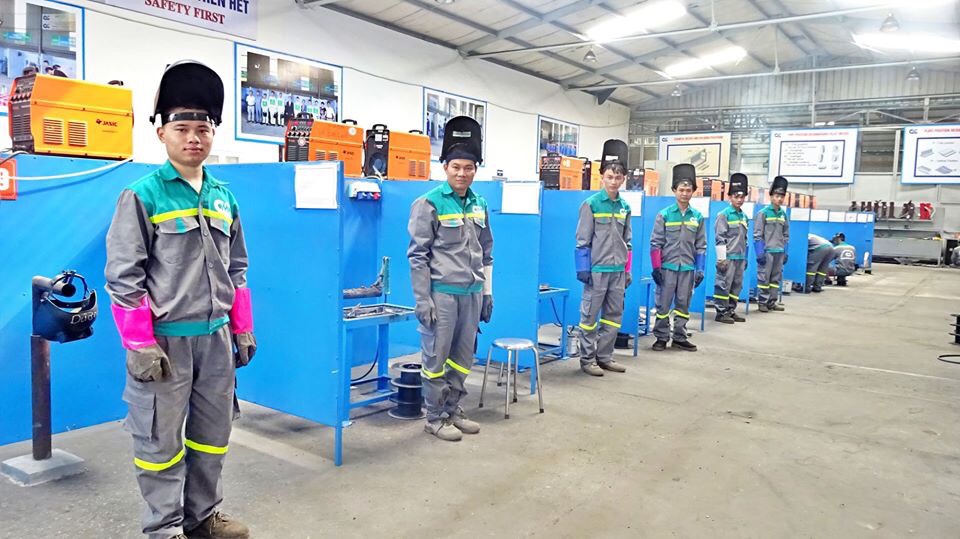
1. Why Is Vietnam Becoming an Important Source of Skilled Welders?
One of Vietnam’s strongest advantages is its large and relatively young workforce, combined with many years of experience supplying workers to international markets.
Vietnamese workers have been employed in Japan, South Korea, Taiwan, European countries, the Middle East, and other destinations for decades. As a result, an increasing number of workers are familiar with international requirements regarding workplace discipline, occupational safety, productivity, technical standards, and multicultural working environments.
For welding, mechanical engineering, and shipbuilding industries, candidates can be recruited from a wide range of backgrounds, including:
- Mechanical engineering factories
- Steel fabrication companies
- Shipbuilding and ship repair yards
- Oil and gas projects
- Piping installation projects
- Industrial equipment manufacturers
- Pressure vessel and tank fabrication factories
- Industrial construction projects
- Workers returning from Japan, South Korea, Taiwan, Europe, or the Middle East
This represents a significant advantage for international employers who need to recruit dozens or even hundreds of skilled workers for large projects.
Vietnam can establish recruitment campaigns according to specific job requirements instead of simply providing general labor.
Employers can determine welding methods, welding positions, materials, experience requirements, qualifications, project experience, and testing standards before candidates are selected.
2. What Types of Welders Can a Vietnam Welder Supplier Provide?
Depending on the employer’s Welding Procedure Specification (WPS), materials, thickness, welding positions, inspection requirements, and project standards, Vietnamese candidates can be screened and practically tested before final selection.
3G Welders
3G welders normally perform groove welding on plates in a vertical position.
They are commonly recruited for:
- Shipbuilding
- Ship block fabrication
- Steel structures
- Industrial plants
- Heavy engineering
- Offshore structures
- Mechanical fabrication
Experienced 3G welders are particularly important in shipbuilding because large ship sections require extensive vertical welding on steel plates and structures.
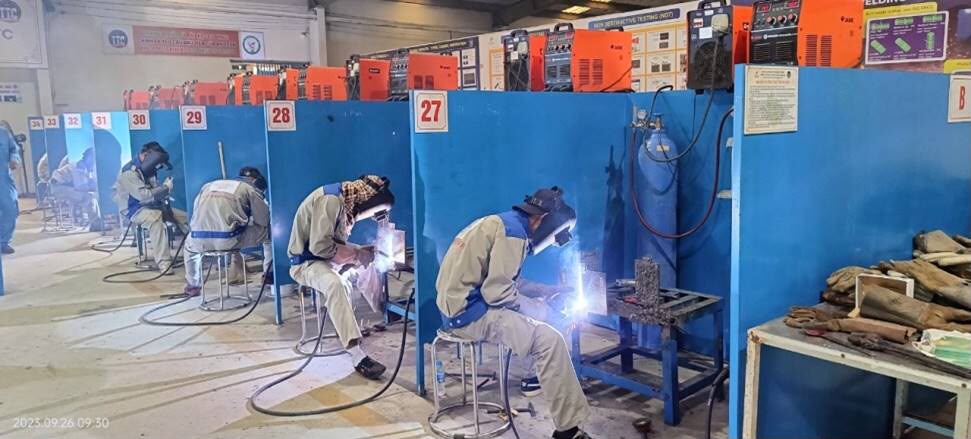
4G Welders
4G welders perform overhead welding and are commonly required in shipbuilding, steel fabrication, industrial construction, and structural projects.
This welding position requires good control of the weld pool, welding speed, penetration, and electrode or wire movement because the welder works underneath the joint.
Qualified 4G welders are frequently needed in locations where fabricated structures cannot be repositioned.
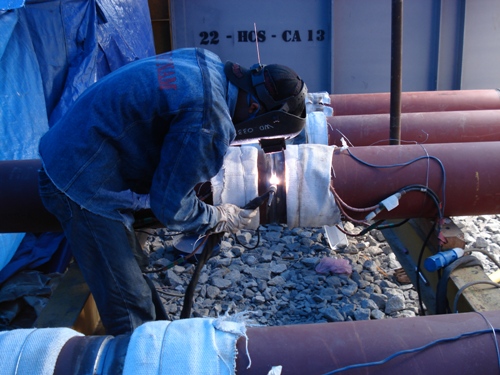
6G Pipe Welders
6G welders are highly sought after in piping, oil and gas, power plants, industrial construction, and shipbuilding projects.
In a 6G welding test, the pipe is fixed at an inclined angle, requiring the welder to perform welding through several positions around the circumference of the pipe.
6G pipe welders may be recruited for:
- Ship piping
- LNG piping
- Oil and gas projects
- Pressure piping
- Engine-room piping
- Hydraulic systems
- Industrial pipelines
- Petrochemical projects
Because of the technical difficulty involved, 6G pipe welders are often among the most highly skilled welding personnel required by international projects.
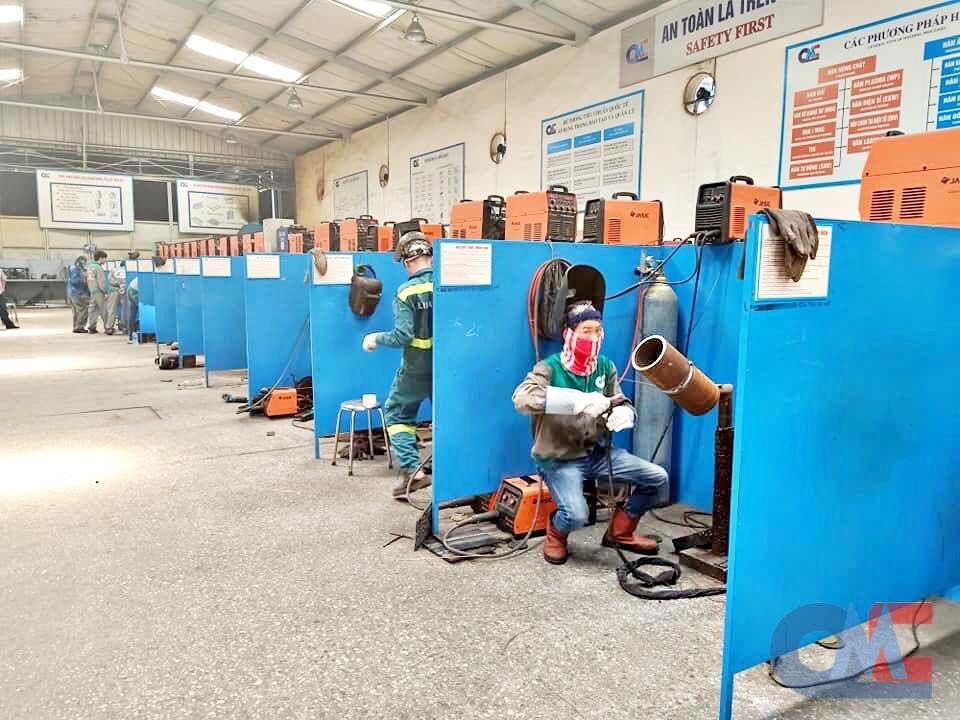
Stainless Steel and Alloy Welders
For projects involving special materials, Vietnamese manpower suppliers can also recruit and screen:
- Stainless steel welders
- Alloy steel welders
- TIG pipe welders
- Combination welders
- Carbon steel pipe welders
- Specialized industrial welders
Candidates should always be assessed according to the actual material, welding process, WPS, thickness, diameter, and inspection standards required by the employer.
3. Welding Processes Available for Recruitment in Vietnam
International employers can request practical welding tests according to specific processes and project requirements.
Common welding processes include:
111 – SMAW / Manual Metal Arc Welding
SMAW is widely used in:
- Steel structures
- Piping
- Construction
- Ship repair
- Industrial maintenance
- Mechanical projects
The process is highly flexible and is suitable for many outdoor and industrial working environments.
135 – GMAW/MAG Welding
Process 135 generally involves gas metal arc welding using solid wire.
It is commonly used in:
- Mechanical fabrication
- Steel structures
- Manufacturing
- Industrial production
- Automated and semi-automated welding applications
136 – FCAW / Flux-Cored Welding
Process 136, commonly associated with flux-cored wire welding under the relevant classification system, is particularly important in shipbuilding and heavy steel fabrication.
FCAW welders are among the most frequently requested skilled workers in modern shipbuilding.
The process provides relatively high productivity, making it suitable for large steel structures and ship hull fabrication.
141 – GTAW / TIG Welding
GTAW/TIG welding is commonly used for:
- Pipe root welding
- Stainless steel
- Process piping
- High-quality industrial joints
- Thin materials
- Precision welding
- Specialized piping systems
International employers can therefore recruit workers according to specific processes rather than treating all welders as having identical skills.
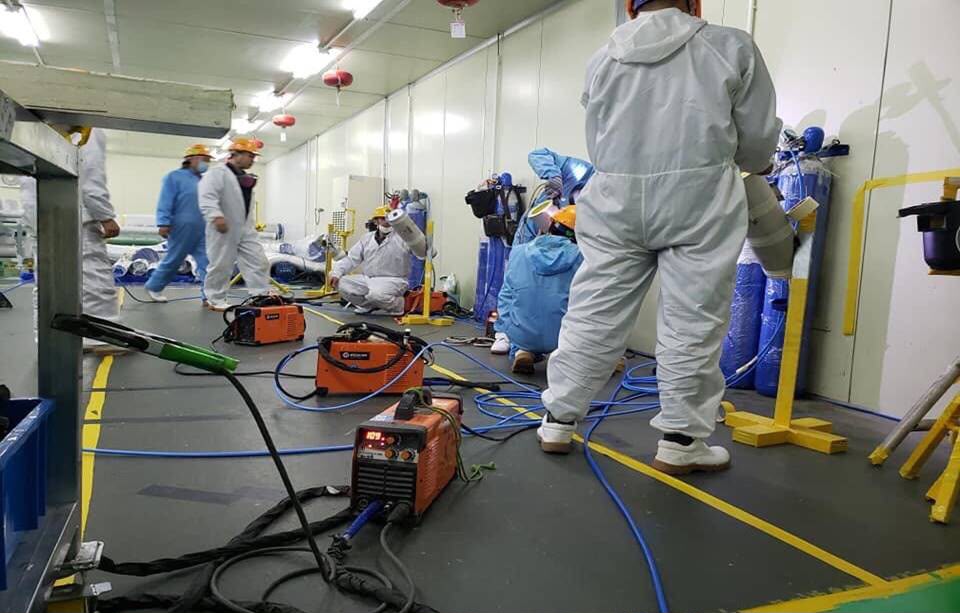
4. Vietnamese Welders and South Korea’s Shipbuilding Manpower Demand
The period from 2022 onward clearly demonstrated the increasing demand for foreign skilled manpower in South Korea’s shipbuilding industry.
The South Korean government expanded the recruitment of foreign technical workers for shipbuilding occupations such as:
- Welders
- Painters
- Electricians
- Other technical shipyard workers
By the third quarter of 2023, among 7,765 E-7 skilled foreign workers recommended through South Korea’s relevant industrial and shipbuilding mechanisms, 6,966 workers had completed Ministry of Justice review procedures and entered shipyard workplaces.
Together with Korean workers and other foreign employment categories, South Korea significantly expanded the workforce available to its shipbuilding industry.
Samsung Heavy Industries also reported the use of hundreds of foreign workers by the company and its subcontractors and announced plans to expand foreign recruitment as part of its efforts to address manpower shortages.
Major South Korean shipbuilding groups and their subcontracting networks—including organizations associated with Samsung Heavy Industries, HD Hyundai/Hyundai Mipo, and Hanwha Ocean—have required workers in many occupations, including:
- 3G structural welders
- 4G structural welders
- 6G pipe welders
- FCAW welders
- GTAW/TIG pipe welders
- Hull fitters
- Steel fabricators
- Pipe fitters
- Industrial painters
- Ship electricians
- Ship hull assembly workers
Vietnam has become one of the recruitment sources considered for shipbuilding and welding personnel, particularly where candidates can successfully pass practical skill tests organized according to employers’ technical standards.
International employers should nevertheless distinguish between the overall number of foreign workers recruited by the South Korean shipbuilding industry and the number recruited specifically from Vietnam.
This distinction is important for ensuring accurate and reliable information.
5. Welding Qualifications and Practical Skill Testing
For a professional Vietnam Welder Supplier, recruitment capacity should not be measured by the number of available CVs alone.
The most important factor is the ability to verify the real technical skills of each candidate.
Depending on the destination country, employer, project, and applicable welding code, candidates may be trained, tested, or certified according to requirements such as:
- ISO 9606-1
- AWS welding standards
- AWS D1.1
- ASME Section IX when required
- Employer Welding Qualification Tests
- WPS-specific welding tests
- Visual inspection
- UT testing
- RT testing
- Other NDT requirements
ISO 9606-1 specifies qualification testing requirements for welders performing fusion welding of steels.
AWS D1.1 is one of the most widely recognized structural welding codes and includes requirements related to welding procedures, welder qualification, fabrication, workmanship, and inspection.
However, employers should not assume that every Vietnamese welder automatically possesses every international certificate.
The professional approach is:
Candidate Screening → Practical Welding Test → Technical Evaluation → Employer Final Test → Certification or Qualification as Required
This provides much stronger quality control than recruitment based only on CVs or previous job titles.
6. Recruitment and Screening Process for Vietnamese Skilled Workers
A professional international recruitment program should follow a structured process.
Step 1 – Employer Manpower Requirement
The employer provides detailed recruitment information, including:
- Required occupation
- Number of workers
- Welding process
- Welding position
- WPS
- Material
- Material thickness
- Pipe diameter where applicable
- Required work experience
- Required qualification
- Age requirements
- Salary
- Working hours
- Overtime
- Accommodation
- Contract duration
- Work location
The more detailed the job order is, the more accurately candidates can be recruited and tested.
Step 2 – Candidate Recruitment
Candidates can be sourced through:
- Experienced welder networks
- Vocational training institutions
- Mechanical factories
- Shipyards
- Steel fabrication companies
- Returning overseas workers
- Specialized technical recruitment programs
Step 3 – Document Screening
Recruitment teams review candidates’:
- CVs
- Employment history
- Welding experience
- Trade qualifications
- Welding certificates
- Passports
- Technical documents
- Overseas working experience
Candidates who do not meet the employer’s basic requirements can be removed before practical testing.
Step 4 – Practical Welding Test
Qualified candidates may then participate in practical examinations such as:
- 3G welding tests
- 4G welding tests
- 6G pipe welding tests
- FCAW tests
- GTAW/TIG tests
- SMAW tests
- GMAW/MAG tests
- Combination welding tests
Tests can also be conducted according to the employer’s own WPS.
Step 5 – Employer Selection
International employers may travel to Vietnam to supervise technical tests and interview candidates directly.
Alternatively, interviews and parts of the assessment process may be conducted remotely when appropriate.
The final technical decision should remain with the employer or authorized technical inspection organization.
Step 6 – Legal Documentation and Deployment
After candidates are selected, the recruitment agency proceeds with the necessary:
- Employment documentation
- Contracts
- Immigration procedures
- Visa documentation
- Pre-departure requirements
- Worker deployment procedures
The process must comply with Vietnamese law as well as the immigration and labor regulations of the destination country.
Vietnam’s overseas employment activities are regulated under Law No. 69/2020/QH14 on Vietnamese Workers Working Abroad Under Contract, which took effect on January 1, 2022.
Since March 1, 2025, the Department of Overseas Labor (DOLAB) has operated under Vietnam’s Ministry of Home Affairs and carries out state management functions relating to Vietnamese workers working overseas under contracts.
This includes responsibilities associated with licensing manpower enterprises, management of overseas employment activities, contract registration, worker preparation, and orientation education.
Therefore, international recruitment should be implemented through legally compliant channels and authorized manpower organizations.
7. Pre-Departure Training and Cultural Orientation
Professional manpower recruitment does not end when a candidate passes a welding test.
Before traveling overseas, workers should receive orientation and preparation for the destination country and employer.
Important training areas include:
- Laws of the destination country
- Employment contract requirements
- Employer regulations
- Occupational safety
- Industrial working discipline
- Time management
- Production discipline
- Basic communication skills
- Workplace behavior
- Local culture and customs
- Employee rights and responsibilities
- Emergency contact procedures
- Corporate culture
For shipbuilding workers, occupational safety training is particularly important.
Shipyards can involve many high-risk activities, including:
- Working at height
- Confined-space work
- Welding gases
- Hot work
- Electrical equipment
- Heavy lifting
- Cranes
- Steel structures
- Simultaneous industrial operations
Workers therefore need not only technical welding skills but also the ability to follow strict safety regulations and industrial procedures.
8. Advantages of Recruiting Skilled Welders from Vietnam
Large Manpower Pool
Vietnam has an established overseas employment system capable of supplying large numbers of workers to international markets.
This creates a strong foundation for employers looking for reliable recruitment channels.
Ability to Recruit for Large Projects
Recruitment campaigns can be developed for:
- 20 workers
- 50 workers
- 100 workers
- Several hundred workers
Actual recruitment capacity will depend on the occupation, required skills, salary, working conditions, testing standards, visa conditions, and recruitment timeframe.
Training According to Employer WPS
One major advantage is that selected candidates can receive additional technical preparation before participating in the employer’s final skill test.
This allows manpower suppliers to recruit according to actual project requirements instead of selecting candidates solely based on previous job titles.
Multiple Skilled Occupations Available
In addition to welders, employers may recruit:
- Pipe fitters
- Hull fitters
- Steel fabricators
- Ship electricians
- Industrial painters
- Scaffolders
- Mechanical workers
- Ship hull assemblers
- Construction workers
This enables large contractors and shipyards to recruit several occupational groups through a coordinated manpower program.
International Work Experience
Some Vietnamese candidates have previously worked in:
- Japan
- South Korea
- Taiwan
- Europe
- Middle Eastern countries
This can provide employers with candidates who already understand overseas employment conditions, workplace discipline, production schedules, and multicultural environments.
9. Vietnam Welder Supplier – A Manpower Solution for Global Employers
For international companies searching for skilled welders from Vietnam, choosing a professional Vietnam manpower supplier is essential.
A qualified supplier should be able to provide much more than candidate CVs.
An effective recruitment model should include:
Employer Requirement → Candidate Sourcing → Screening → Welding Test → Employer Selection → Training → Legal & Visa Processing → Deployment → Overseas Worker Support
This structured recruitment process can help employers:
- Reduce recruitment time
- Improve candidate quality
- Verify technical skills
- Control recruitment standards
- Reduce unsuitable placements
- Prepare workers before departure
- Comply with legal requirements
- Build a sustainable skilled workforce
For long-term shipbuilding, steel fabrication, construction, and industrial projects, establishing a reliable manpower supply chain in Vietnam can provide a valuable alternative source of qualified technical workers.
10. Positive Analysis: Why Vietnamese Manpower Can Benefit International Employers
The international labor market is changing rapidly.
Many developed and industrialized economies are facing:
- Aging populations
- Shortages of young technical workers
- Declining interest in heavy-industry occupations
- Increasing labor costs
- Difficulty recruiting welders locally
- Expanding infrastructure and industrial projects
In this environment, Vietnam offers several strategic advantages.
First, Vietnam has a large workforce and a strong vocational training culture in mechanical engineering, welding, construction, manufacturing, and shipbuilding-related occupations.
Second, Vietnamese workers have already established a substantial presence in major Asian labor markets such as Japan, South Korea, and Taiwan.
Third, Vietnam’s growing participation in European and other international labor markets is creating a larger pool of workers familiar with global working environments.
Fourth, workers can be selected according to specific technical requirements rather than recruited as general labor.
For example, an employer can request:
50 FCAW 3G/4G welders + 20 6G pipe welders + 30 hull fitters + 20 pipe fitters
Candidates can then be recruited and tested separately for each occupation.
This creates a recruitment model based on measurable technical skills.
For employers, the key benefits may include:
- Access to a wider labor pool
- Flexible recruitment volume
- Technical testing before deployment
- Training according to employer requirements
- Ability to recruit several trades simultaneously
- Pre-departure orientation
- Long-term recruitment partnership opportunities
Vietnam should therefore be viewed not simply as a source of low-cost labor, but as a potential international skilled manpower supply market capable of supporting industrial projects where quality, productivity, safety, and technical competency are important.
11. Conclusion
Vietnam is becoming an increasingly important manpower source for international industries, particularly in:
- Shipbuilding
- Welding
- Steel fabrication
- Mechanical engineering
- Industrial construction
- Oil and gas
- Manufacturing
With access to candidates for 3G welding, 4G welding, 6G pipe welding, FCAW, GTAW, SMAW, GMAW/MAG, stainless steel welding, and alloy welding, a professional Vietnam Welder Supplier can provide international employers with a valuable solution to skilled-worker shortages.
However, successful manpower recruitment depends on more than simply finding workers.
The most effective approach is:
Recruit the right workers – Test according to the right standards – Train according to employer requirements – Comply with applicable laws – Support workers throughout overseas employment.
For shipyards, steel fabrication companies, industrial contractors, manufacturing plants, oil and gas projects, and international recruitment partners looking for skilled manpower, Vietnam represents a strong and growing recruitment market.
Frequently Asked Questions – FAQ
1. How can I find skilled workers in Vietnam?
International employers should work with a legally compliant Vietnam manpower supplier or recruitment agency.
The employer should provide a detailed job description, number of workers, skill requirements, employment conditions, and technical standards.
The recruitment agency can then source, screen, test, and prepare suitable candidates.
2. How can I find welders in Vietnam?
Welders can be recruited from mechanical factories, steel fabrication companies, shipyards, construction projects, vocational networks, and returning overseas workers.
Candidates should undergo a practical welding test before final recruitment.
3. Can Vietnam supply 3G, 4G and 6G welders?
Yes.
Vietnam has candidates with experience in 3G, 4G, 6G, pipe welding, and other welding processes.
However, each candidate’s actual competence should be confirmed through practical testing according to the project requirements.
4. Can I recruit FCAW welders from Vietnam?
Yes.
Employers can recruit Vietnamese welders and organize testing according to FCAW/process 136 requirements or the specific welding procedure required by the project.
5. Can Vietnam supply shipbuilding workers?
Yes.
Vietnam can provide candidates for various shipbuilding occupations, including:
- Welders
- Hull fitters
- Pipe fitters
- Steel fabricators
- Painters
- Electricians
- Scaffolders
- Ship assembly workers
Final availability depends on the employer’s technical standards and recruitment conditions.
6. Do Vietnamese welders have international welding certificates?
Some Vietnamese welders already possess international or project-related welding qualifications.
Other candidates may need to be tested or requalified according to ISO, AWS, ASME, or employer-specific requirements before deployment.
Employers should always verify the validity and scope of each certificate.
7. How do I find a Vietnam manpower supplier?
Employers should evaluate:
- Legal licensing
- International recruitment experience
- Technical testing facilities
- Recruitment network
- Worker training capability
- Document processing procedures
- Overseas worker management
- Previous international projects
For overseas employment recruitment, employers should work with legally authorized Vietnamese enterprises operating under the relevant regulations.
8. Can employers conduct welding tests directly in Vietnam?
Yes.
International employers can organize or supervise practical welding tests in Vietnam before making the final selection.
This is often one of the most effective ways to verify candidate skills before recruitment.
9. Can Vietnam supply hundreds of skilled workers for one project?
Large-scale recruitment campaigns are possible.
However, actual recruitment numbers depend on:
- Occupation
- Technical requirements
- Welding qualifications
- Salary
- Working conditions
- Recruitment timeframe
- Visa regulations
- Destination-country requirements
A phased recruitment plan is often effective for large manpower projects.
10. What should employers send to a Vietnam recruitment agency?
Employers should provide a detailed manpower request containing:
- Job title
- Number of workers
- Welding process
- Welding position
- WPS
- Material
- Required experience
- Qualification requirements
- Salary
- Working hours
- Overtime policy
- Accommodation
- Food allowance
- Transportation
- Contract duration
- Work location
- Insurance
- Expected deployment date
The more detailed the manpower request, the easier it is to identify suitable workers.
11. Where can I find shipbuilding workers in Vietnam?
Shipbuilding manpower can be recruited through experienced manpower suppliers, vocational institutions, mechanical workshops, shipyards, steel fabrication companies, and networks of workers with previous overseas shipbuilding experience.
Employers should conduct trade-specific testing before selection.
12. How can I find a recruitment agency in Vietnam for skilled workers?
Search for a Vietnam recruitment agency, Vietnam manpower supplier, or Vietnam skilled worker supplier with appropriate legal authorization and experience in your industry.
Before signing a recruitment agreement, employers should verify the company’s legal status, recruitment capacity, technical testing process, and overseas worker management system.
Contact Vietnam Manpower Supply Agency today to discuss your specific workforce needs and discover the difference that skilled Vietnamese workers make.
Do you want to hire #workers, seasonal workers and long-term workers from Vietnam?
But you don’t know about:
❓ What kind of service we provide?
👉 Consulting on finding Vietnamese welders
👉 Looking for a supply of welder human resources
👉 Consult about Vietnam’s labor market
👉 Source suitable workers meeting your requirements
👉 Take documents procedures in Vietnam
👉 Train workers languages and vocational skills
👉 Handle problems while Vietnamese workers work in EU
Please contact #Vietnammanpowersupply for #internationalhiring,
We will support you to do all things.
DETALL: #GLOBALSTAFFRECRUITMENT
Please contact us for more details:
☎ Whatsapp: +84 961 951 555
🌐 Website: vietnammanpower.group
📩 Email: vietnammanpower18@gmail.com
We are happy to assist you!